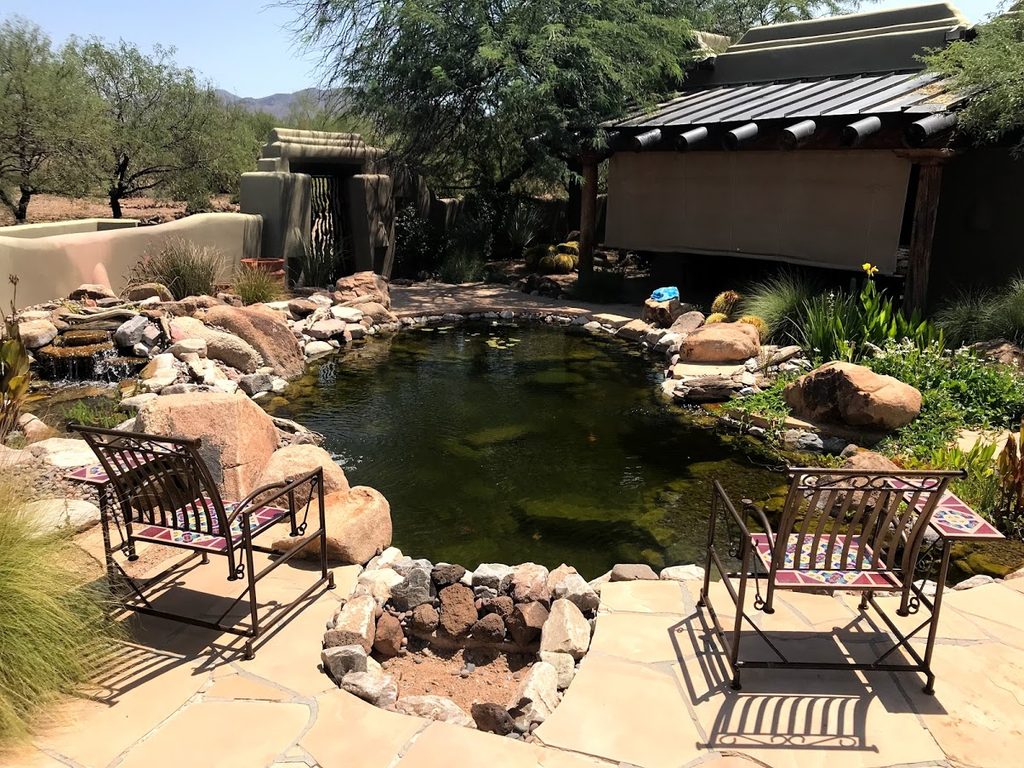
When a swimming pool is converted into a pond, the existing filtration system is inspected—but it usually is not left operating in its original form. A pool filter is designed to help chemically sanitize relatively lifeless water. A pond filtration system must support fish, aquatic plants, beneficial bacteria, and a complete living ecosystem.
Some existing plumbing, skimmers, drains, or equipment locations may be reusable if they are in good condition and fit the new design. The pool’s cartridge, sand, or diatomaceous earth filter is commonly removed, bypassed, or relegated to a limited supporting role. In its place, a professionally designed conversion generally uses pond-specific circulation, mechanical prefiltration, and biological filtration—often including an intake bay or pond skimmer, a constructed wetland filter, waterfalls, aeration, and strategically placed circulation jets.
The short version: we do not assume the pool equipment is useless, but we also do not force swimming-pool technology to do a pond’s job.
Why Pool Filtration and Pond Filtration Are Not the Same
A swimming pool and a living pond may both hold water, but they manage that water in fundamentally different ways.
Traditional swimming pools are usually designed around:
- Chlorine, salt-generated chlorine, or another oxydizer
- Rapid mechanical filtration through sand, cartridges, or diatomaceous earth
- Smooth surfaces intended to discourage biological growth
- Regular removal of algae and microorganisms
An ecosystem pond is designed around:
- Fish, aquatic plants, and other living organisms
- Beneficial bacteria that process organic waste
- Mechanical removal of leaves and suspended debris
- Biological filtration that helps manage ammonia and nutrients
- Continuous circulation and oxygen exchange
- Rock, gravel, plant roots, and filter media that provide biological surface area
That difference matters. The goal is no longer to sterilize the water. The goal is to create a balanced aquatic environment that can process nutrients naturally while remaining healthy, attractive, and manageable.
The Pond Gnome’s pool-conversion process begins with draining and thoroughly cleaning the pool so sanitizers, and other chemical residues do not threaten fish, plants, or beneficial bacteria. From there, the existing circulation and filtration system can be evaluated honestly.
Is the Existing Pool Filter Removed?
In many conversions, yes. A traditional pool filter may be removed, disconnected, or bypassed because it was not designed to serve as the main filtration system for a fish pond.
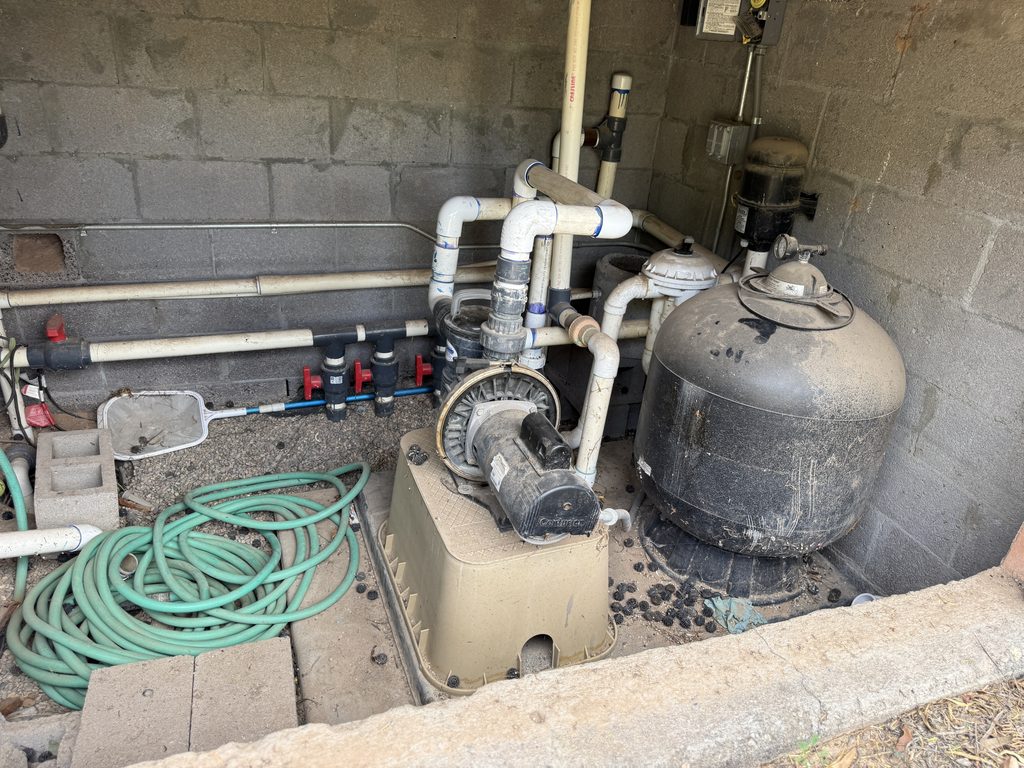
Sand filters
Pool sand filters can capture suspended particles, but they also create several pond-related challenges:
- Organic pond debris can overload the filter quickly.
- Backwashing wastes a significant amount of water.
- The filter does not provide the kind of accessible, ecosystem-style biological treatment typically desired in an organic pond.
- If chlorination equipment remains connected, even if unused, it may create problems due to blockage or a leak issue unnecessarily.
A sand filter can sometimes be adapted for a specialized application, but “it is already there” is not a good enough reason to make it the heart of the new system.
Cartridge filters
Cartridge filters may polish pool water effectively, but pond water carries more organic material than pool water. That will mean frequent cleaning, declining flow, and more hands-on maintenance than the pond owner expects.
Diatomaceous earth filters
DE filters can trap extremely fine particles, but they tend to be unnecessarily fine and maintenance-intensive for an ecosystem pond. They are never our first choice for a natural pool-to-pond conversion.
Chlorinators, salt systems, UV units, and chemical feeders
Pool chlorinators, salt-chlorine generators, ozone systems, and automatic chemical feeders are generally shut down and removed from the active pond circuit. A pond cannot establish a healthy microbial community if the equipment is continually trying to sanitize that community out of existence.
A pool UV unit should not automatically be confused with a pond ultraviolet clarifier. Even if the technologies sound similar, flow rates, exposure requirements, plumbing, and intended use may be different. Every component must be evaluated for the new application.
Can Any of the Existing Pool Equipment Be Reused?
Sometimes—and this is where an experienced pond contractor can save money without compromising the finished ecosystem.
Potentially reusable elements include:
- Underground plumbing: Sound suction or return lines may be incorporated into the new circulation plan after inspection and pressure testing.
- Existing skimmer openings: Some can be adapted, although a pond skimmer or intake bay must safely handle leaves, fish, and variable organic debris.
- Main drains: Existing drains may be abandoned, converted into circulation pickups, or incorporated only when their condition and layout make sense.
- Return fittings: These may become circulation jets that help reduce dead zones and move debris toward the intake.
- Equipment pads: The old pad may provide a convenient location for pumps, aeration equipment, electrical controls, or other serviceable components.
- Electrical service: Existing power may be useful if it meets current code and the load requirements of the new pond equipment.
- Pumps: Occasionally reusable, but only after comparing flow, head pressure, energy consumption, serviceability, and continuous-duty suitability.
Reuse should always be a design decision—not a reflex. Old pool equipment can appear to reduce the conversion price while quietly increasing energy use, maintenance, and operating cost for years.
What Replaces the Pool Filtration System?
There is no universal equipment package. The correct system depends on the pool’s size and shape, fish load, desired water clarity, surrounding landscape, waterfall design, and how the homeowner wants to use the finished space.
Most successful conversions combine several of the following elements.
1. A pond skimmer or intake bay
The intake side of the system collects floating leaves, dust, seed pods, and other debris before it sinks and decomposes.
An intake bay can be especially useful for a large converted pool because it:
- Handles more debris than a small conventional skimmer
- Provides space for one or more pond pumps
- Creates a serviceable prefilter zone
- Can be integrated naturally with boulders and gravel
- Helps protect downstream biological filtration from excessive solids
Aquascape recommends prefiltering water before it enters a constructed wetland filter, using a skimmer, intake bay, or wet well. This reduces clogging, maintenance, and inconsistent hydraulic performance.
2. Biological filtration
Beneficial bacteria need oxygenated water and ample surface area. They colonize filter media, rock, gravel, and other surfaces, helping process fish waste and decomposing organic matter.
Depending on the conversion, biological filtration may include:
- A constructed wetland filter
- A BioFalls-style waterfall filter
- Gravel and rock surfaces within an ecosystem design
- Specialized external biological filtration for a heavily stocked koi pond
The right choice depends partly on whether the goal is a natural water garden, a dedicated koi pond, a wildlife habitat, or a recreational-style pond.
3. A constructed wetland filter
For many larger pool conversions, a wetland filter is an attractive and effective option. Water is distributed beneath layers of structural modules and gravel, then moves upward through the filter before returning to the pond through a stream or waterfall.
That process provides:
- Sediment settling
- Extensive biological surface area
- Nutrient uptake through aquatic plants
- Improved water clarity and quality
- A natural-looking return to the pond
- Convenient access for periodic cleanout when designed correctly
Aquascape’s wetland filtration guidance emphasizes proper prefiltration, appropriate flow, an accessible cleanout vault, and a gravity return to the pond. Those details are important; a wetland filter is not simply a gravel box attached to the old pool plumbing.
4. Waterfalls and aeration
Moving water is not merely decorative. Waterfalls, streams, aeration systems, and surface agitation support oxygen exchange, which benefits fish and the bacteria responsible for biological filtration.
Phoenix heat makes oxygen management especially important because warmer water holds less dissolved oxygen. A good Arizona pond conversion plans for circulation and aeration from the beginning rather than treating them as accessories.
5. Circulation jets
The rectangular shape, deep end, steps, benches, and corners of an existing pool can create dead zones. Properly positioned pond jets can help:
- Move debris toward the intake
- Circulate oxygenated water through deeper areas
- Reduce stagnant pockets
- Improve temperature and water-quality consistency
Existing return lines may sometimes be repurposed for these jets, but only after their route, diameter, condition, and hydraulic capacity are confirmed.
What Happens to the Pool Pump?
The existing pump is evaluated just like the rest of the equipment. Some pool pumps can move enough water, but flow alone does not settle the question.
We also consider:
- Is the pump rated and practical for continuous operation?
- How much electricity does it consume?
- What flow will it actually produce at the system’s total dynamic head?
- Can it safely handle the intake configuration?
- Is it compatible with fish-safe prefiltration?
- Are replacement parts readily available?
- Will it be easy for the homeowner or service technician to maintain?
Older single-speed pool pumps can be expensive to run around the clock. A pond-specific, properly sized pump may deliver the needed circulation with lower energy use and easier service access. In other cases, an efficient existing variable-speed pump may have a useful supporting role. The answer comes from the design and the numbers.
What Happens to the Main Drain and Pool Skimmer?
Neither component should be automatically reused or automatically filled in.
The main drain may be:
- Pressure-tested and incorporated into a circulation loop
- Converted into a deep-water pickup with appropriate safety considerations
- Used indirectly as part of a bottom-circulation strategy
- Permanently abandoned if the line is damaged, poorly located, or unnecessary
The pool skimmer may be:
- Adapted as part of the mechanical intake
- Replaced with a pond skimmer
- Supplemented or replaced by a larger intake bay
- Abandoned if it cannot accommodate the required flow or debris load
Fish safety matters. Open suction points and high-velocity intakes can be dangerous, so any reused component must be reconfigured for a living pond—not simply switched back on.
Why a Professional Evaluation Matters
Two swimming pools that look similar from the patio may require very different conversion strategies. Before recommending what stays and what goes, The Pond Gnome evaluates factors such as:
- Pool volume, shape, and depth
- Structural condition and existing interior finish
- Pipe sizes, routes, and pressure-test results
- Pump condition, efficiency, and performance
- Existing electrical capacity and code compliance
- Sun exposure and Arizona summer temperatures
- Nearby trees and anticipated debris load
- Intended fish species and stocking level
- Desired water clarity
- Available space for an intake bay, wetland filter, and waterfall
- Long-term access for maintenance and repairs
The cheapest conversion is not necessarily the one that reuses the most equipment. The best value is a system that performs reliably, remains serviceable, and does not saddle the homeowner with avoidable energy and maintenance costs.
Frequently Asked Questions
Can I keep my pool filter and simply stop adding chlorine?
Usually, that is not enough. Removing chlorine eliminates the sanitizer, but it does not transform a pool filter into something that can handle pond solids. Fish waste, leaves, algae, plant material, dissolved nutrients, biological filtration, oxygenation, and continuous circulation all need to be addressed.
Can an old sand filter be converted into a biological pond filter?
It may be technically possible in certain systems, but it is not automatically the best solution. The filter’s size, media, backwashing requirements, flow characteristics, and maintenance burden must be evaluated against pond-specific alternatives.
Can the existing pool pump run a waterfall?
Possibly. The pump and plumbing must be evaluated at the waterfall’s actual head pressure and required flow. Energy consumption is also important because pond pumps commonly operate continuously.
Can the pool’s underground pipes be reused?
Yes, if they are correctly sized, in good condition, and useful in the new hydraulic design. They should be inspected and pressure-tested before the new pond is built around them.
What happens to the chlorinator or salt system?
It is normally disconnected from the active system. Chlorine is harmful to fish, plants, and the beneficial bacteria that make biological filtration work.
Will a pond need more maintenance than the old pool?
Not necessarily—just different maintenance. A well-designed ecosystem pond replaces routine chemical sanitation with tasks such as removing collected debris, managing plants, checking pumps, monitoring fish, and periodically cleaning filtration components. Poor design, undersized filtration, or inappropriate reused equipment can make any pond unnecessarily demanding.
Do all pool-to-pond conversions need a wetland filter?
No. Wetland filters are excellent tools, particularly on larger or heavily loaded systems, but the correct filtration plan depends on the pond’s size, fish load, layout, clarity goal, and available space.
Can I keep the pool shell exactly as it is?
Sometimes much of it can remain, but the interior may need cleaning, repair, modification, rockwork, shelves, habitat features, or a new waterproofing strategy. The filtration design and structural conversion must be planned together.
How long before fish can be added?
Fish should be introduced only after pool chemicals have been removed, the new system is operating properly, source water has been conditioned, and water parameters are safe. Biological filtration takes time to mature, so stocking should be deliberate rather than rushed.
Conclusion: The Old System Is a Starting Point, Not the New Plan
When a swimming pool becomes a pond, its filtration system must change from chemical sanitation to ecological water management. The old pump, plumbing, skimmer, drains, and equipment pad may offer useful pieces, but each component has to earn its place in the new design.
A successful conversion generally combines:
- Fish-safe mechanical prefiltration
- Properly sized pumps and plumbing
- Biological filtration
- Adequate oxygenation and circulation
- Accessible cleanout and service points
- A design suited to Arizona’s heat, dust, and organic debris
That is how an unused pool becomes more than a container filled with pond water. It becomes a living, balanced water feature that looks natural, supports aquatic life, and gives the backyard an entirely new purpose.
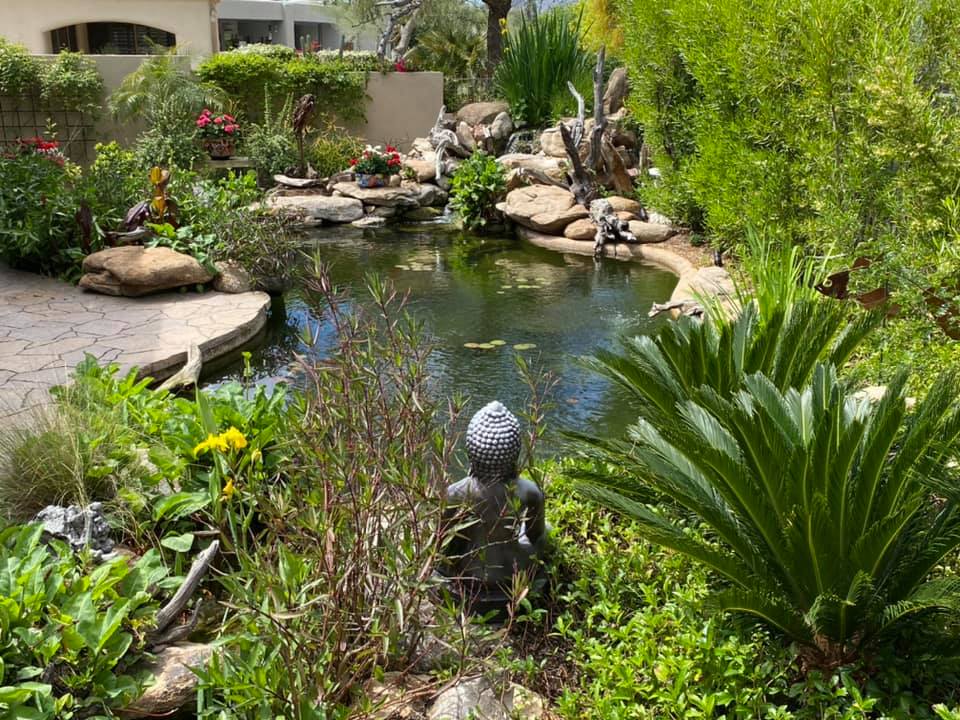
Ready to Find Out What Can Be Reused?
If you have an aging, underused, or expensive-to-maintain swimming pool in Phoenix, Scottsdale, Glendale, Peoria, or the surrounding Arizona communities, The Pond Gnome can evaluate the existing structure and filtration system, explain what is worth keeping, and design a pond-specific system around the life you want the water to support. Do not guess which pipes work, whether the old pump is economical, or how much filtration your future koi pond or water garden will need. Contact The Pond Gnome to schedule a consultation and start turning that old swimming pool into a living backyard oasis.