
Rainwater harvesting helps manage stormwater in Phoenix by catching rain where it falls, slowing its trip across the property, and storing or soaking it into the landscape. That can reduce localized runoff, erosion, and the amount of water carrying debris and pollutants toward streets, washes, and storm drains. The key is a system sized for the site, with a safe path for overflow when a monsoon brings more water than it can hold.
We live in a desert, so it’s tempting to think rain is too scarce to bother collecting. Then a summer storm rolls through, and suddenly the driveway is a river and that pretty gravel has relocated itself to the sidewalk. Sound familiar?
At The Pond Gnome, we look at rainwater as a resource and a drainage design question. Where does it come from, where is it going, and what could it do for your landscape along the way?
Why does stormwater matter in Phoenix?
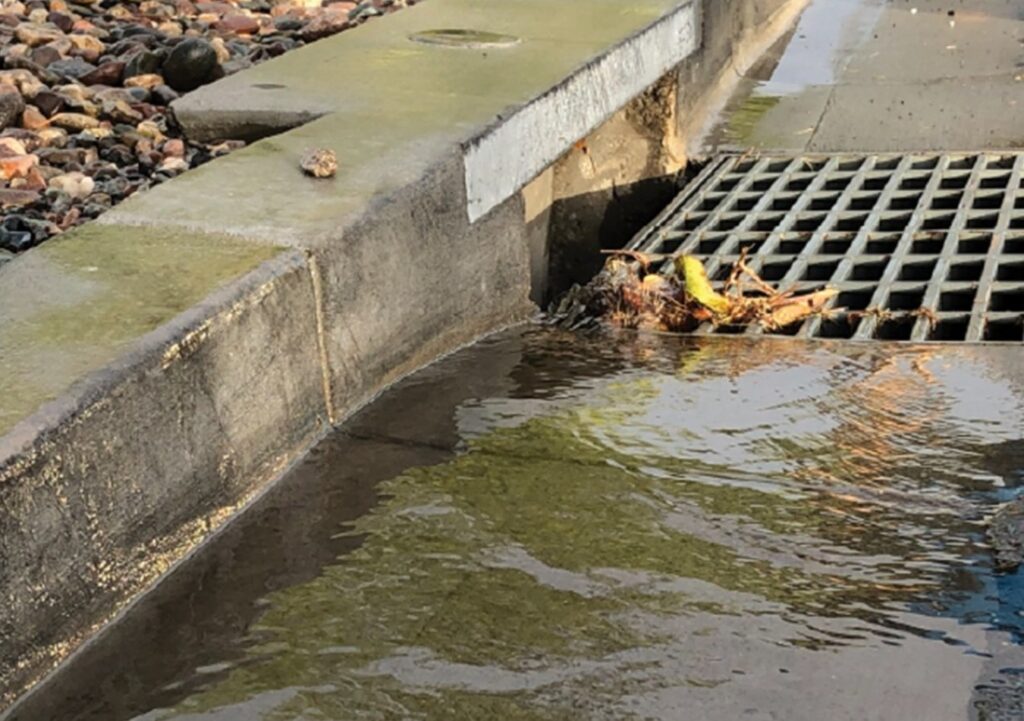
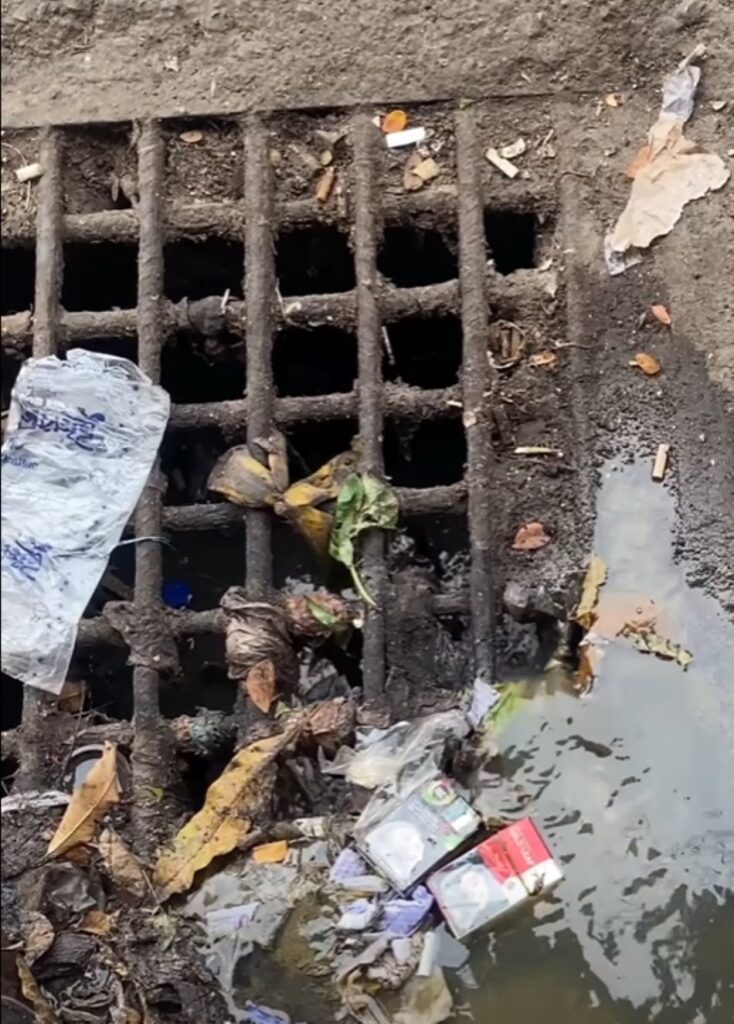
Roofs, driveways, patios, and compacted ground shed water quickly. During a hard rain, runoff may move across the yard, cut channels through decomposed granite, pool near structures, or continue into the street. Along the way, stormwater can pick up sediment, trash, oil, fertilizer, and pet waste. Phoenix notes that stormwater flowing into washes and rivers does not pass through a wastewater treatment plant first.
Rainwater harvesting gives some of that water a useful stop before it leaves your property:
- Less runoff: Capture some roof or paved-area flow in a basin or storage system.
- Slower runoff: Spread water through a swale, planted area, or other designed route instead of concentrating it at one erosive outlet.
- Cleaner runoff: Keep sediment and debris out of storage with appropriate pretreatment, and let planted basins help filter water that soaks into the soil.
- Useful water: Support desert-adapted plants, irrigation, or an appropriately designed water feature.
Phoenix calls approaches like these green stormwater infrastructure. The city includes stormwater harvesting basins, bioswales, permeable surfaces, and other features that store, infiltrate, or use runoff.
How much water could a Phoenix roof collect?
Here’s a handy starting point: 1 inch of rain on 1,000 square feet of roof equals about 623 gallons before collection losses. In real life, around 600 gallons is an easy planning estimate; gutters, first-flush diversion, leaks, and splash-out may reduce what actually reaches storage. The Pond Gnome uses that same approximate 600-gallon rule of thumb.
That does not mean every property needs a 600-gallon tank. The right capacity depends on the roof area routed into the system, how quickly water will be reused or infiltrate, available space, and where excess water can go safely. A reservoir that is already full when the next storm arrives has little room to capture more runoff.
What does a rainwater harvesting system look like?
There is no single solution for every yard. These are common options, from simple to more involved:
Passive harvesting: let the landscape do the work
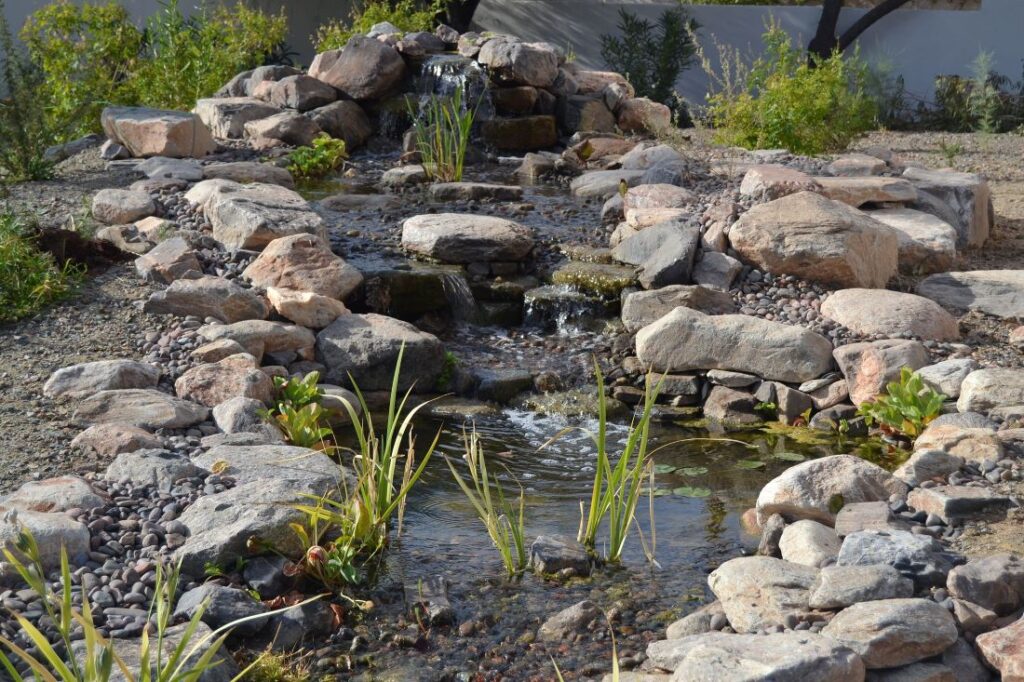
- Rain gardens or shallow harvesting basins receive runoff and temporarily hold it while water soaks into the soil.
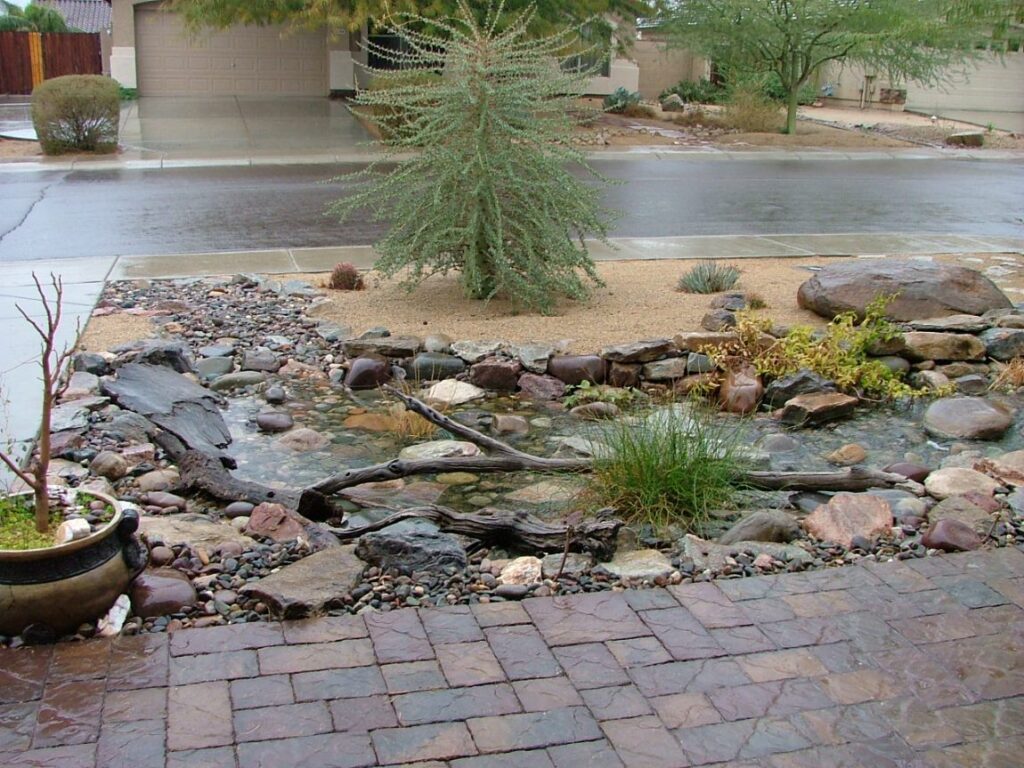
- Rock or vegetated swales guide water along a gentler route, helping reduce erosion when properly graded.
- Permeable hardscape can allow some rainfall to pass through instead of racing across a solid surface.
- Native or desert-adapted plants make use of moisture in and around the basin and offer habitat benefits.
These features need the right soil, slope, location, and overflow. A basin belongs away from a home’s foundation and should not send water onto a neighbor’s property. Phoenix’s resident handbook specifically calls for drainage away from structures and adjacent properties.
Active harvesting: store water for later
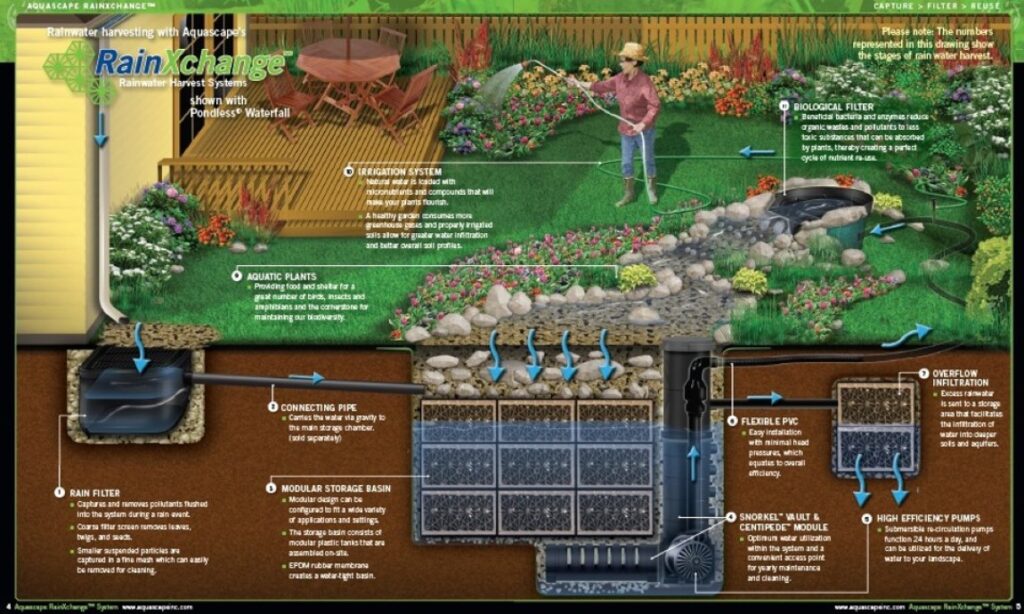
- Gutters and downspouts collect roof runoff and deliver it to a tank or underground reservoir.
- Screens and filters intercept leaves and other debris before water enters storage.
- A cistern or subsurface reservoir holds water for later use, with a designed overflow route for bigger storms.
- A pump and hose or irrigation connection, where appropriate, can put stored water to work between storms.
Aquascape describes a system that pairs subsurface storage with a recirculating fountain or Pondless® Waterfall; stored water can also be accessed for garden irrigation with additional equipment. The Pond Gnome uses underground storage in water feature and stormwater projects around the Valley.
Can a water feature help manage stormwater?
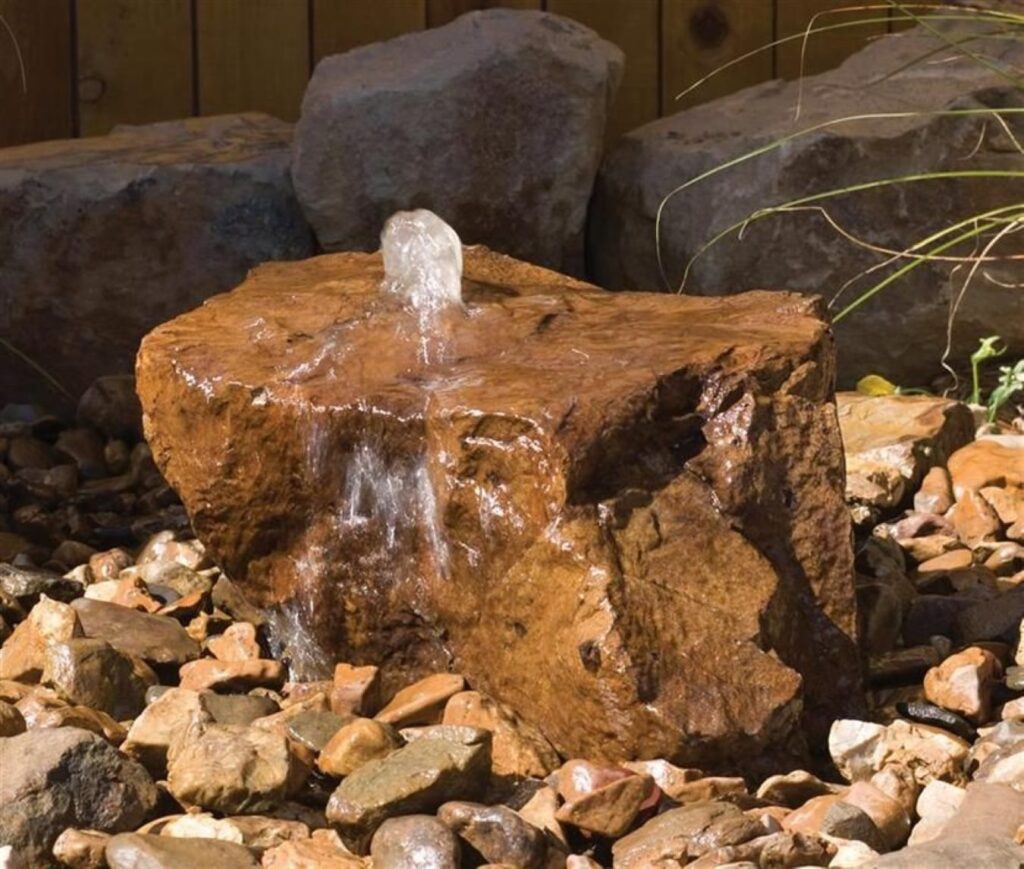
Yes, if its collection, storage, filtration, and overflow are designed for that job. A beautiful waterfall by itself is not a stormwater system. Connect it to a properly planned harvesting reservoir, and the water feature can become one way to enjoy water captured on site. The stored supply may also help with top-offs or landscape watering, depending on the design.
We’ve built local examples that combine stormwater function with living water, including a rainwater-fed recirculating stream at our Peoria showroom and a rainwater harvesting stream at Mesa Community College’s Red Mountain Campus. At the Regents at Scottsdale Apartments, runoff from a parking area moves through rock, gravel, and constructed wetland filters before reaching a cistern. Those are different sites with different engineering needs, but the principle is the same: give water a purposeful route.
Water quality matters, especially around fish and amphibious life. Runoff from pavement may carry oil or other contaminants, so it needs site-specific treatment and should not simply be piped into a koi pond. Roof water also deserves screening and an assessment of roof materials before use. A system may reduce municipal top-off water, but stored rainfall cannot guarantee a self-sustaining water feature through Phoenix’s dry stretches.
What makes a system work during a monsoon?
The best designs plan for the day when everything is full:
- Trace the flow: Identify roof drains, low points, natural drainage paths, utilities, and where water currently causes trouble.
- Match collection to capacity: Estimate runoff from the surfaces actually connected to the system, not the entire property by default.
- Create room for the next storm: Use stored water or design suitable infiltration so storage can recover capacity.
- Plan a safe overflow: Route excess water away from buildings without creating a problem for neighboring property.
- Maintain the inlets: Clear leaves and sediment from gutters, filters, and basin entrances, especially before and after storm season.
- Check local requirements: Phoenix says approvals may depend on the location and scale of the project; work in a public right-of-way or near a drainage way deserves special attention. HOA rules may also apply.
Frequently asked questions
Does rainwater harvesting prevent flooding?
It can reduce localized runoff and help with some drainage problems, but no small residential system can promise to stop flooding in every storm. Capacity, soil conditions, storm intensity, and overflow design all matter. Existing floodplain or drainage requirements still apply.
Is a rain garden the same as a cistern?
No. A rain garden or harvesting basin temporarily holds water so it can soak into planted soil. A cistern stores water for later use. Some properties benefit from both: stored water for reuse, with overflow directed to a suitable storm water basin.
Will harvested rainwater recharge groundwater?
Water that infiltrates on site can contribute to soil moisture and, under suitable conditions, groundwater recharge. How much reaches an aquifer depends on the site; a lined storage tank does not recharge the ground simply by holding water.
Will a rainwater system attract mosquitoes?
Standing water in an open, poorly maintained container can. A properly covered tank or underground reservoir restricts mosquito access; a planted basin should be designed and maintained to drain instead of holding stagnant water for extended periods.
Do I need a permit in Phoenix?
Requirements vary with the work and its location. Small projects may be straightforward, while work affecting a floodplain, natural drainage way, right-of-way, or larger excavation may need City review. Check Phoenix’s current guidance and your HOA before building.
Make the next storm work for your yard
Rainwater harvesting helps Phoenix properties by catching runoff, slowing it down, and putting some of it to use. A planted basin may support native vegetation; an underground reservoir may supply irrigation or a recirculating water feature. The essential piece is a site-specific design that handles ordinary rainfall and sends excess water somewhere safe when the monsoon shows off.
Is your yard losing soil, collecting puddles, or sending rain straight to the street? Schedule a consultation with The Pond Gnome. We’ll look at how water moves through your property and explore a rainwater harvesting solution that fits your landscape—whether that’s a simple planted basin or a beautiful living water feature with storage beneath it.