

Can a Constructed Wetland Help Clear Up a Pond?
Yes. A properly designed constructed wetland filter can improve pond clarity by capturing sediment and supporting natural biological filtration. It combines water circulation, velocity reduction sediment settling and capture, filtration media, beneficial microorganisms, and aquatic plants to help manage waste and excess nutrients. Wetland filtration can often be added to an existing pond, making it a practical option for a water feature that needs more filtering power.
And here’s the fun part: all that hardworking filtration will look like a lush water garden.
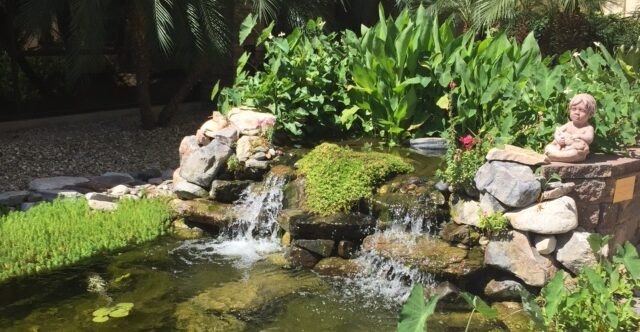
Beautiful Fish. Somewhere Down There.
You bought the koi. You named the koi. You’re pretty sure the koi are still in there.
Seeing them? That’s another story.
We hear from pond owners who have tried bottle after bottle of treatments, only to watch their water turn cloudy again. When the pond’s filtration can’t keep up with what’s going into it, another product may offer only temporary relief.
A constructed wetland could be the upgrade your pond needs—and a pretty spectacular addition to your backyard.
What Is a Constructed Wetland Filter?
A constructed wetland filter is a deliberately built filtration area that borrows from Mother Nature’s playbook. Water moves through a system where sediment can settle, beneficial microorganisms can work, and aquatic plants can absorb nutrients.
You may also hear it called a wetland filter or bog filter. The important part is what happens beneath the beautiful planting bed: controlled water movement through a properly designed filtration system.
Think of it as a filter system with serious muscle—and much better landscaping.
How Does Wetland Pond Filtration Work?
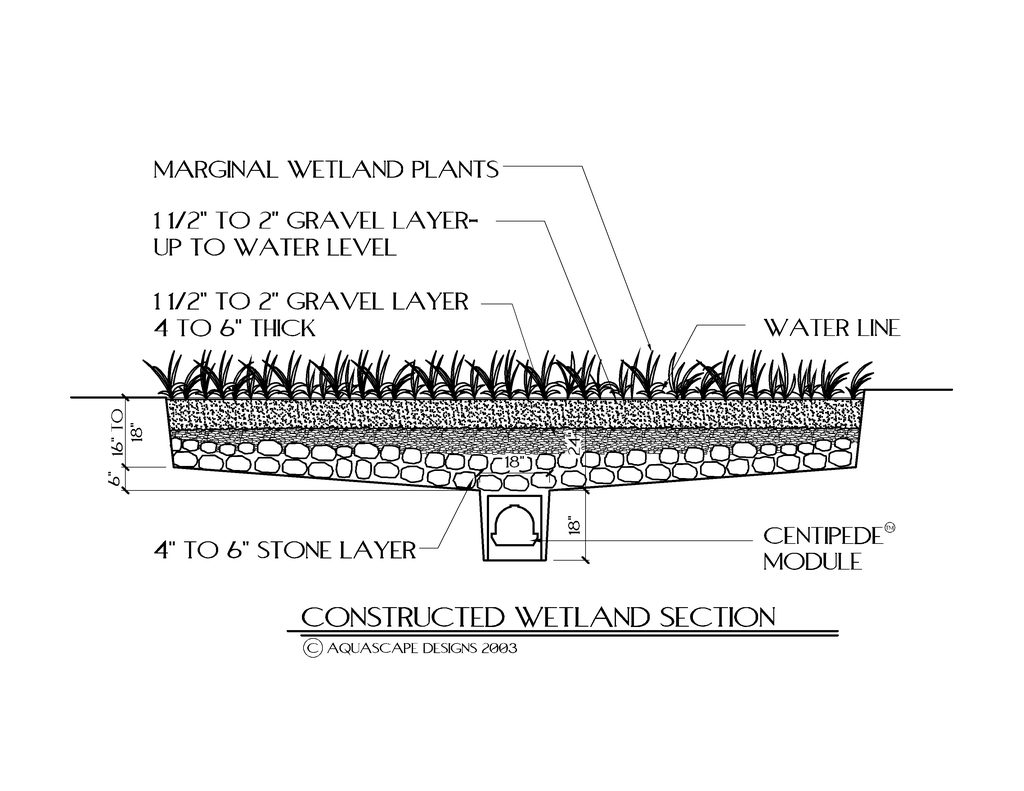
An upflow wetland filter introduces pond water near the bottom and directs it upward through the filtration bed before returning it to the pond.
Several components share the workload:
- Water distribution: Underground components spread incoming water through the filter.
- Sediment settlement: A chamber gives suspended solids a place to settle before water rises through the media.
- Biological filtration: Gravel or engineered media provides surfaces for beneficial bacteria to colonize.
- Aquatic plants: Growing plants absorb nutrients and help the filter blend into the landscape.
- Cleaning access: An accessible vault allows accumulated sediment to be removed.
Aquascape’s systems use components such as Centipede® Modules, AquaBlox® Water Storage Modules, and Snorkel® Vaults. Newer configurations can also incorporate FilterBlox® biological media. The components work together; simply filling a corner with rocks and plants doesn’t create the same system.
When Should You Consider Adding a Wetland Filter?
A wetland filter is worth evaluating when an existing pond needs additional capacity to handle sediment and biological waste.
It can be particularly useful for:
- Established ponds needing a filtration upgrade.
- Larger water features where managing suspended sediment is a challenge.
- Ponds with substantial fish populations that need filtration sized for their waste load.
- New ecosystem ponds where natural filtration can be incorporated from the beginning.
Wetland filtration is an option for both liner and earth-bottom ponds, including retrofits to existing water features. The Pond Gnome emphasizes matching filtration capacity to the demands of the pond.
Our starting point is understanding your pond, as well as making sure that you have the space available for this addition. Before recommending an upgrade, we want to know what’s happening, what equipment is already working, and what you want to enjoy when you step outside.
How Big Should a Constructed Wetland Be?
Wetland filter sizing depends on the system design, pond size, fish load, and water flow. A single percentage won’t fit every pond.
You may have heard the rule of thumb that a wetland should occupy at least 10% of the pond’s surface area. That can be a planning reference, but it isn’t a universal minimum.
For example, Aquascape’s current guidance for systems using FilterBlox modules lists target wetland surface areas of:
- 5–8% of pond surface area for ecosystem ponds.
- 12–25% for recreation ponds.
Those figures apply to that specific system configuration. They should not be applied automatically to a traditional gravel wetland.
For your project, The Pond Gnome will evaluate the available footprint alongside filtration depth, media, circulation, maintenance access, and the pond’s demands. Getting those details right is far more useful than squeezing a filter into whatever space happens to be left over.
Your Filter Can Be a Garden, Too
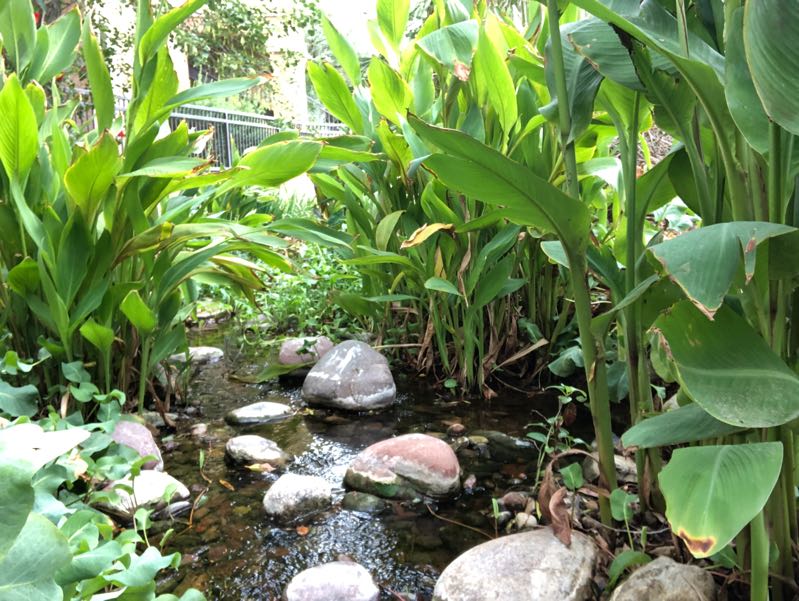
A constructed wetland gives aquatic plants their own growing area beside the pond. That creates an opportunity for lush texture and greenery while keeping more of the main pond open for viewing your fish.
Potential landscape benefits include:
- A dedicated aquatic planting bed.
- A natural transition between pond and garden.
- Filtration that blends into the setting.
- Additional habitat value for visiting wildlife.
The Pond Gnome has long used wetland planting areas to combine filtration, attractive landscaping, and habitat in the Phoenix area.
Yes, you can have hardworking filtration and a backyard that makes you want to linger over your morning coffee.
Wetland Filtration in Scottsdale: A Local Example
This approach reaches beyond backyard koi ponds.
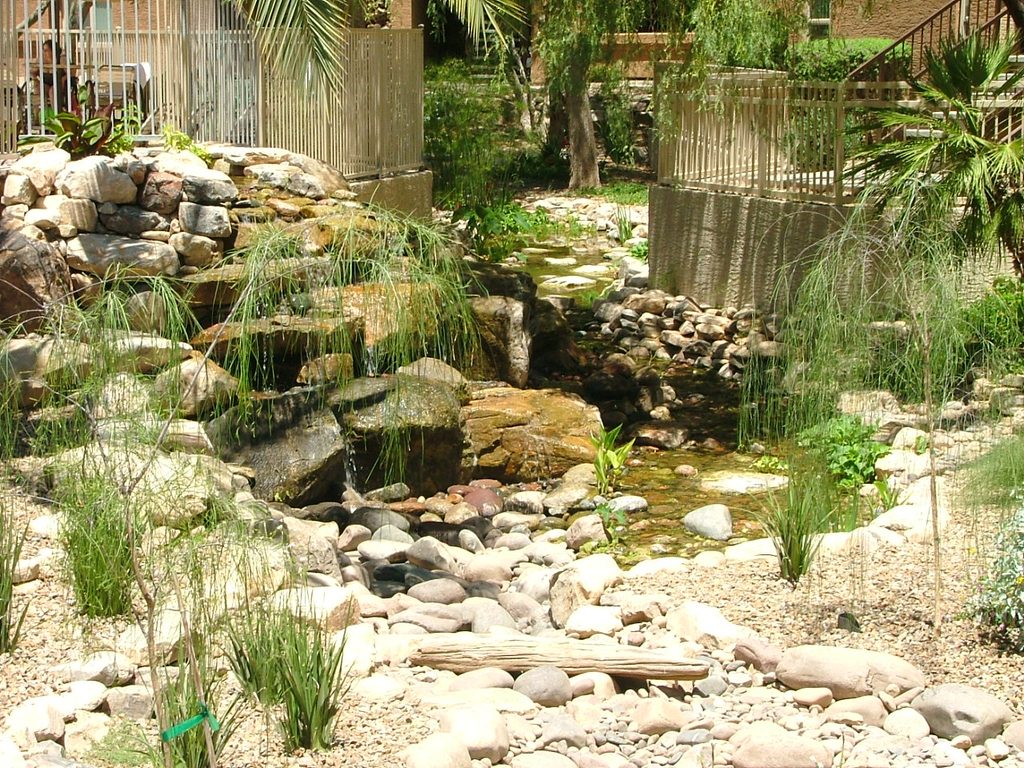
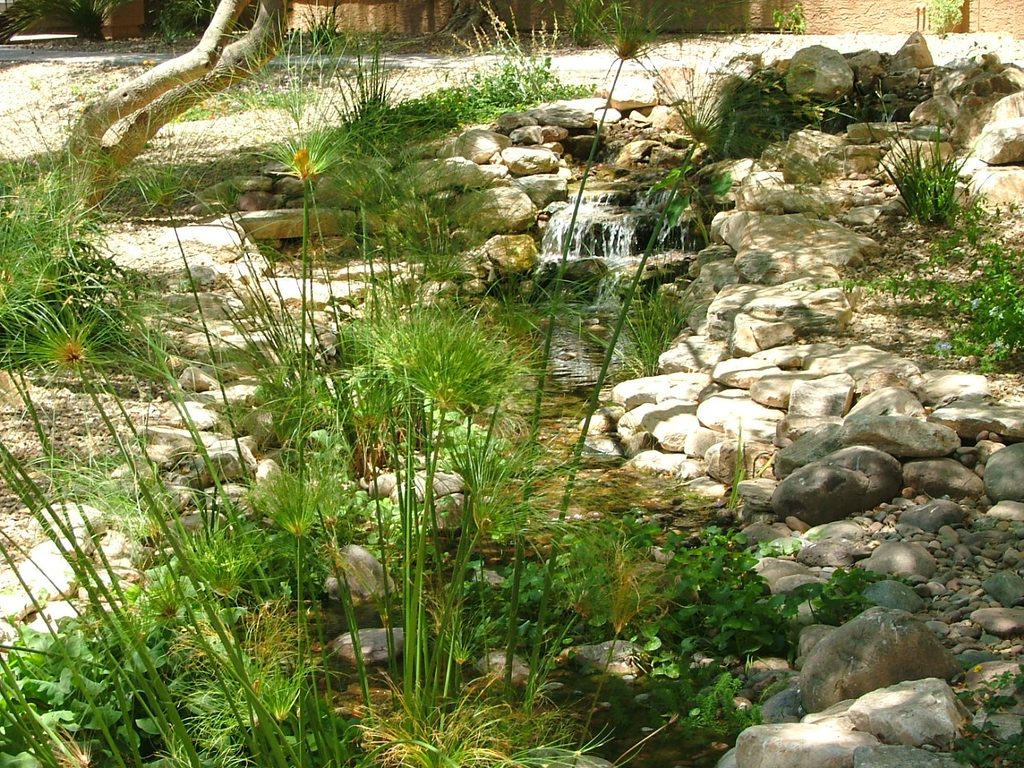
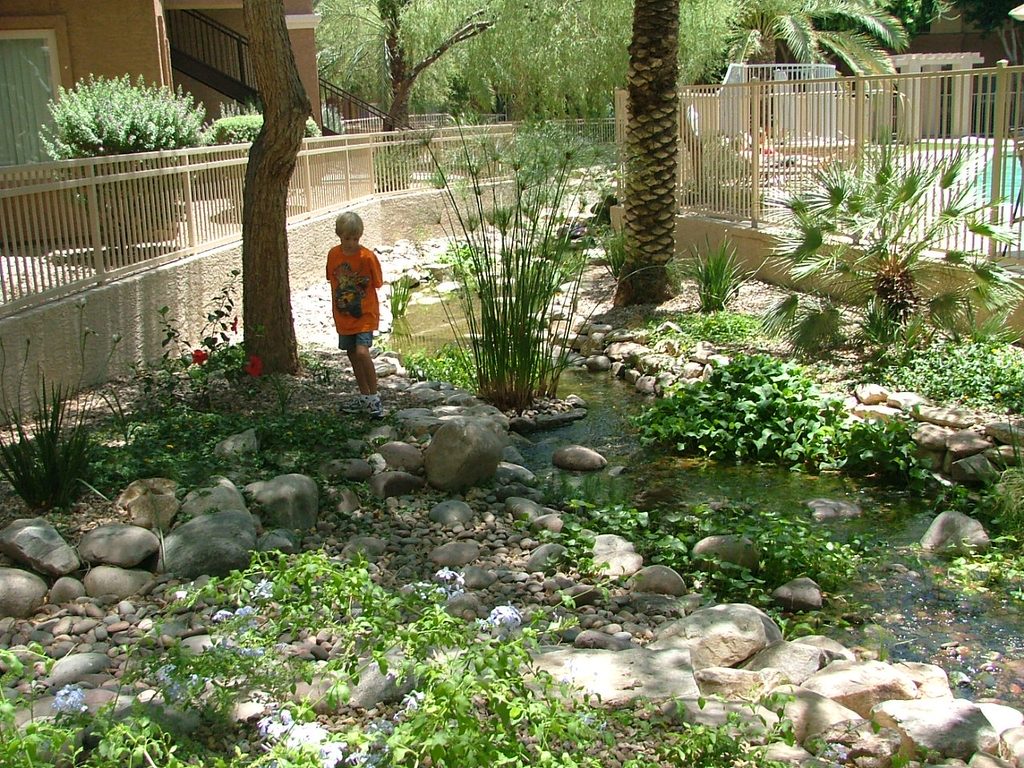
The Pond Gnome’s Regents of Scottsdale project, installed in 2008, uses a riparian ecosystem that accepts runoff from surrounding parking lots. It illustrates how wetland principles can become part of a larger landscape and water-management design.
Our published project account also describes ongoing plant thinning and bacteria and enzyme applications—a useful reminder that natural systems still need care.
Does a Constructed Wetland Need Maintenance?
Yes. Plan for maintenance when you plan the filter.
Depending on the installation, care can include:
- Removing collected sediment through the cleaning access.
- Thinning aquatic plants.
- Checking pumps and water distribution.
- Keeping access points reachable.
Aquascape specifically incorporates cleaning access into its wetland systems, while The Pond Gnome’s Scottsdale project demonstrates the role of ongoing plant management. A filter should be designed to work well and to be serviced sensibly.
Frequently Asked Questions About Constructed Wetlands
Can a wetland filter be added to my existing pond?
Often, yes. Aquascape’s modular wetland systems can be retrofitted to existing ponds. Available space, plumbing, elevation, and the pond’s needs determine the appropriate layout.
Is a bog filter the same as a constructed wetland filter?
The terms overlap. Aquascape uses both names for this category of natural pond filtration. When comparing proposals, ask about water distribution, filtration media, sediment collection, and cleaning access.
Will a wetland filter eliminate algae?
Wetland filtration can help manage excess nutrients and reduce the maintenance associated with algae. It should be viewed as part of the pond’s overall filtration strategy rather than a promise of an algae-free pond.
Does every pond need a constructed wetland?
No. A wetland is one filtration option. The decision depends on the pond’s needs, existing equipment, available space, and your goals.
Can constructed wetlands work in Phoenix?
Yes. The Pond Gnome’s Scottsdale work provides a local example of wetland principles used in an Arizona landscape. The design and ongoing care need to suit the site.
Conclusion: Give Your Problem Pond Some Natural Filtering Power
A constructed wetland combines sediment capture, biological filtration, and aquatic planting in one attractive landscape feature. Proper sizing, water distribution, and cleaning access help make it a useful upgrade for an existing pond—or a strong foundation for a new one.
For the right pond, it’s a chance to improve the water while adding a whole new layer of backyard enjoyment.
Ready to Enjoy Your Pond Again?
If your fish are playing hide-and-seek in cloudy water, let’s find out why.
Contact The Pond Gnome to schedule a pond evaluation and explore whether constructed wetland filtration fits your Phoenix-area water feature. We’ll help you understand your options and plan improvements around your pond, your landscape, and the way you want to enjoy them.
You bought those beautiful fish for a reason. Let’s help you enjoy the view.