
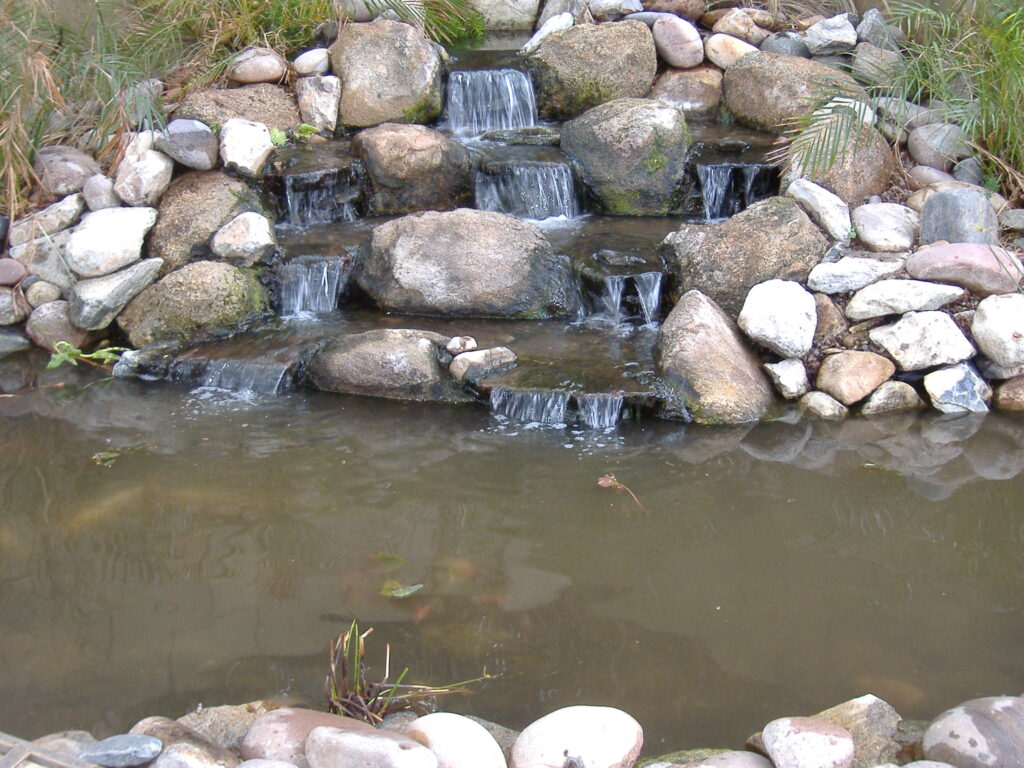
Cloudy pond water is usually not an emergency, but it is your pond’s way of telling you that something is out of balance. In Arizona, cloudy water is most commonly caused by bacteria blooms, suspended clay or dust, poor mechanical filtration, fish activity, recent construction, or a problem within in your pond’s biological filtration system.
The good news? Most cloudy water problems can be corrected quickly once you identify the cause.
At The Pond Gnome, we view cloudy water as a symptom—not the problem itself. Finding the root cause is the key to restoring naturally clear water.
Not All Cloudy Water Is the Same
One of the biggest mistakes homeowners make is treating every cloudy pond the same way.
Different types of cloudiness point to different issues.
Ask yourself:
- Is the water gray or brown?
- Is it milky white?
- Is it greenish?
- Did it happen overnight?
- Did you recently clean the pond?
- Was there a dust storm?
- Did you add new gravel or rocks?
These clues help determine what’s really happening.
Milky White Cloudy Water
If your pond suddenly looks like diluted milk, you’re probably seeing a beneficial bacteria bloom.
This is actually a good sign.
Beneficial bacteria multiply rapidly when they suddenly have a large food source, such as:
- New pond startup
- Large water changes
- Heavy fish feeding
- Organic debris
- Dead algae
- Recently cleaned filters
The bacteria temporarily remain suspended in the water until they colonize the rocks, gravel, and filter media.
Good news:
This usually clears on its own within several days to two weeks.
Avoid:
- Draining the pond
- Adding chemicals
- Repeatedly cleaning filters
Those actions often reset the biological cycle and make the problem last longer.
Brown or Gray Cloudy Water
Arizona presents a unique challenge.
Dust.
Our monsoon winds can dump an incredible amount of fine sediment into ponds.
Other causes include:
- New gravel installations
- Fish digging
- Waterfalls disturbing loose sediment
- Construction nearby
- Clay soils
- Dogs entering the pond
Fine particles stay suspended until your filtration captures them.
Solutions include:
- Improve mechanical filtration
- Clean skimmer baskets
- Knock excess sediment from filter mats
- Add filter floss temporarily
- Allow the pond time to settle
Green Cloudy Water vs. Cloudy Water
Many people confuse cloudy water with green water.
They’re different problems.
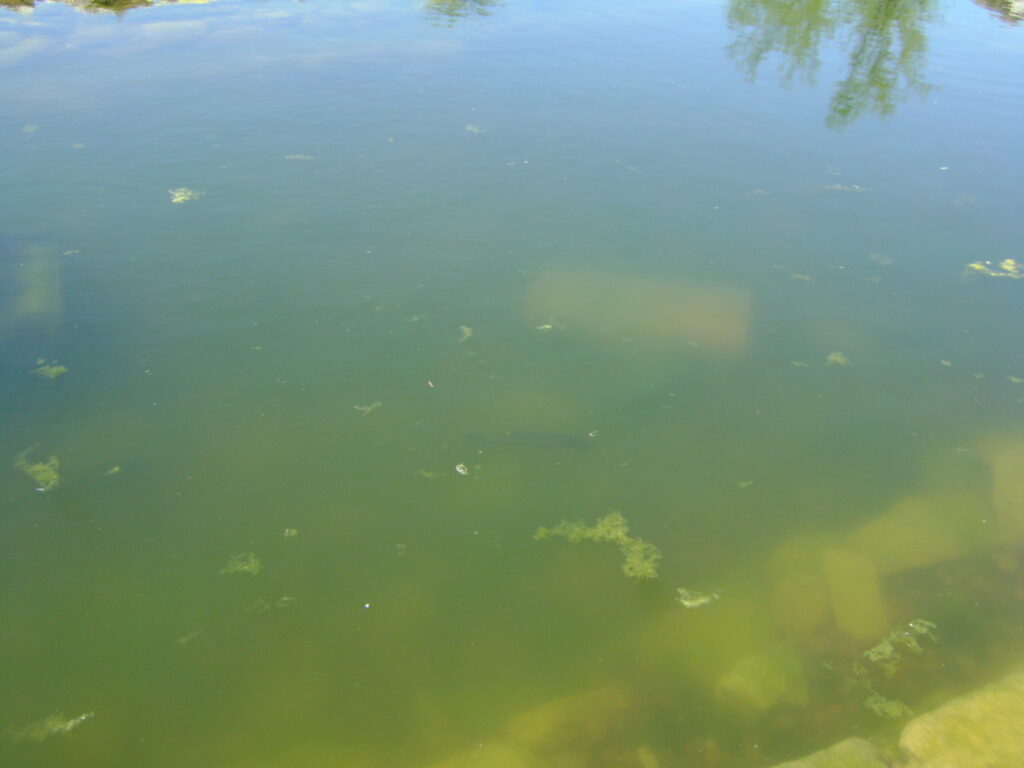
Green water means free-floating algae.
Cloudy water usually means suspended particles or bacterial blooms.
Green water often develops when:
- Nutrients are too high
- Filtration is undersized
- Too much sunlight reaches the pond floor.
An Aquascape Ecosystem Pond normally controls these issues naturally through biological filtration and aquatic plants.
New Pond? Expect Some Cloudiness
Brand-new ecosystem ponds rarely become crystal clear immediately.
This is normal.
Every new pond goes through what Aquascape calls the biological maturation process.
During the first several weeks:
- Beneficial bacteria establish themselves.
- Biofilm develops on rocks.
- Plants begin absorbing nutrients.
- The ecosystem balances itself.
Patience is part of the process.
Trying to force clear water with chemicals usually delays nature.
Could Your Filter Be the Problem?
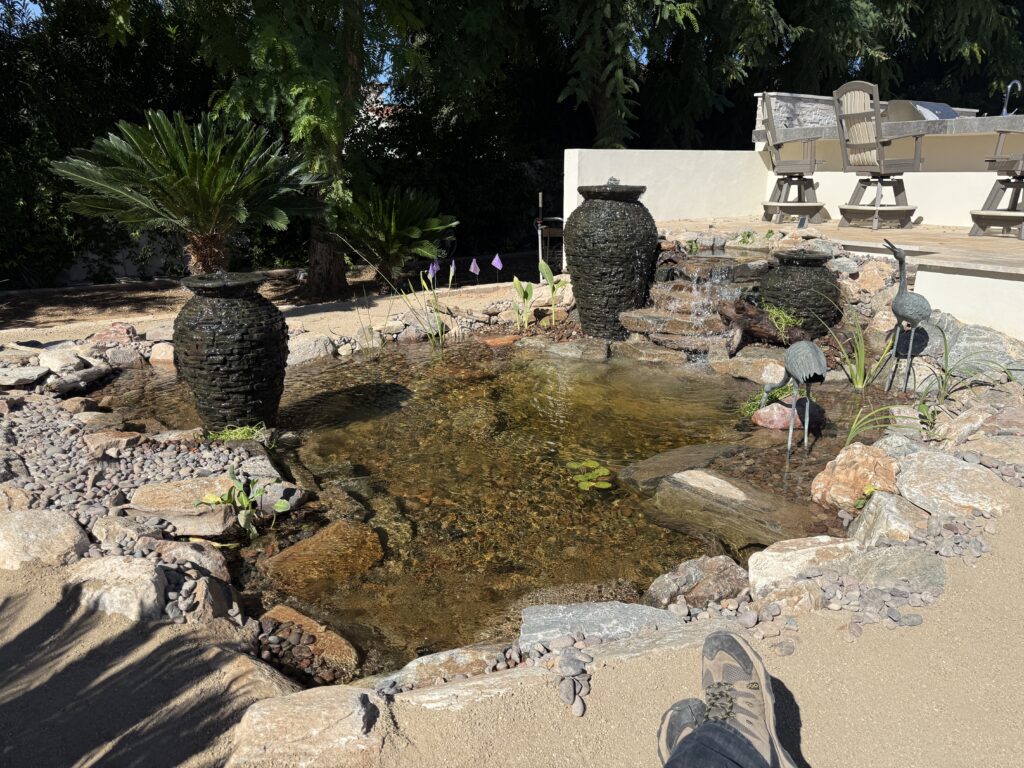
Sometimes cloudy water simply means your filtration system isn’t keeping up.
Ask yourself:
- Is the pump flowing properly? Is it sized properly for the biological filter?
- Has the skimmer basket been emptied?
- Is the BioFalls filter clogged?
- Is filter media overdue for cleaning?
- Has your fish population increased?
- Has your pond accumulated years of debris?
Even a premium filtration system needs periodic maintenance.
At The Pond Gnome, we often find ponds with perfectly good equipment that simply needs professional servicing.
Fish Can Cause Cloudy Water
Koi love to dig.
Especially in summer.
As they search for food, they stir up fine sediments from the bottom.
This becomes worse if:
- Gravel depth is insufficient
- Fish are overcrowded
- Fish are overfed
- The pond lacks proper circulation
Healthy ecosystem ponds are designed so that water movement continually carries debris toward the skimmer instead of allowing it to remain in the main pond body.
Arizona’s Hard Water Can Play a Role
Arizona’s mineral-rich water is different from many other parts of the country.
High calcium levels can occasionally contribute to temporary cloudiness after:
- Large water changes
- New pond fills
- Adding certain water treatments
Fortunately, once the ecosystem stabilizes, these issues disappear naturally.
Resist the Urge to Drain Your Pond
One of the worst things you can do is completely drain a cloudy pond.
Draining removes:
- Beneficial bacteria
- Stable water chemistry
- Healthy microorganisms
- Mature biofilm
After refilling, the biological cycle starts over.
Unless a pond has a severe contamination issue, draining usually makes cloudy water worse—not better.
How to Fix Cloudy Pond Water Fast
Start with these steps:
1. Identify the type of cloudiness.
- White
- Brown
- Gray
- Green
Different causes require different solutions.
2. Check your filtration.
Inspect:
- Pump
- Skimmer
- Biological filter
- Plumbing
- Water flow
3. Reduce excess nutrients.
- Remove leaves.
- Trim dying plants.
- Feed fish only what they consume in a few minutes.
4. Add beneficial bacteria.
High-quality beneficial bacteria, like those recommended by Aquascape, help strengthen your pond’s natural biological filtration and can speed recovery after maintenance or seasonal changes.
5. Be patient.
Many cloudy water problems resolve naturally within several days as the ecosystem rebalances.
How Aquascape Ecosystem Ponds Stay Clear Naturally
Aquascape ecosystem ponds are designed to let nature do the work.
Instead of relying heavily on chemicals, they combine:
- Mechanical filtration
- Biological filtration
- Gravel bottoms
- Beneficial bacteria
- Aquatic plants
- Proper circulation
The result is a living ecosystem that becomes more stable over time.
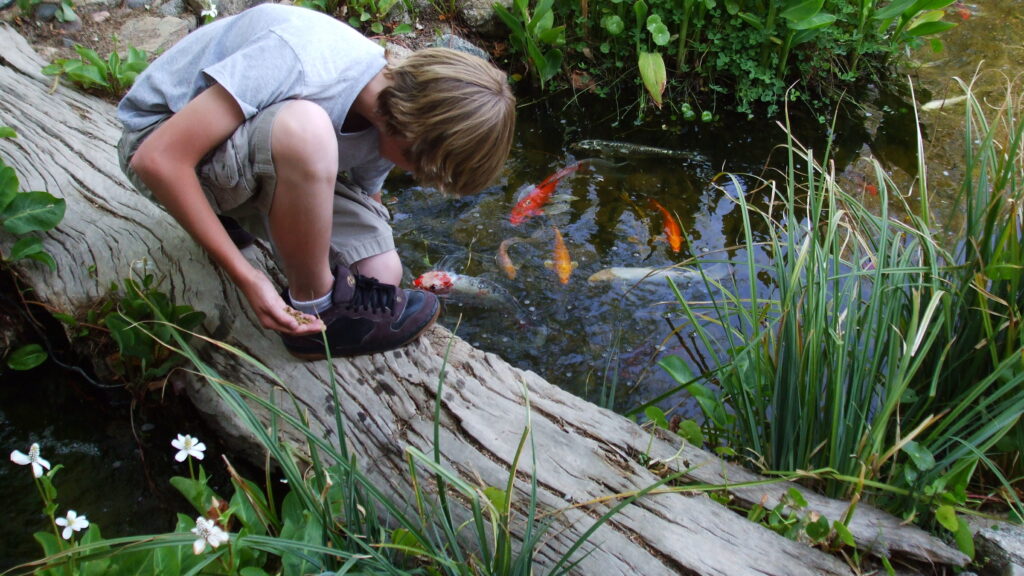
That’s why properly designed ecosystem ponds often have remarkably clear water despite supporting fish, frogs, dragonflies, birds, and thriving plant life.
When It’s Time to Call a Professional
If your pond has remained cloudy for more than two weeks despite proper maintenance, it may indicate a larger issue such as:
- Undersized filtration
- Pump problems
- Excessive fish load
- Organic sludge buildup
- Poor circulation
- Design flaws
- Years of neglected maintenance
A professional inspection can often identify the problem in a single visit, saving you time, frustration, and unnecessary expenses.
At The Pond Gnome, we’ve helped hundreds of Arizona pond owners diagnose water clarity issues and restore healthy, beautiful ecosystem ponds without resorting to harsh chemicals.
Frequently Asked Questions
Is cloudy pond water harmful to fish?
Usually not. Most cloudy water is caused by beneficial bacteria or suspended particles. However, if the cloudiness is accompanied by fish gasping at the surface, foul odors, or sudden fish deaths, immediate professional attention is recommended.
How long should cloudy pond water last?
Most bacterial blooms clear within several days to two weeks. Sediment-related cloudiness often improves within a few days once filtration captures the particles.
Should I add chemicals to clear cloudy pond water?
Generally, no. Most cloudy water issues are best resolved by improving filtration, supporting beneficial bacteria, and allowing the pond to naturally rebalance. Chemical clarifiers may provide temporary results but rarely address the underlying cause.
Why did my pond become cloudy after cleaning it?
Cleaning removes a portion of your beneficial bacteria. As they recolonize your filter and rocks, temporary cloudiness is common and usually resolves on its own.
Can Arizona dust storms make my pond cloudy?
Absolutely. Fine desert dust can remain suspended for several days, especially after monsoon winds. Good mechanical filtration and a little patience usually restore clarity.
Why is my pond cloudy after adding new fish?
More fish produce more waste and increase foraging activity which can temporarily overwhelm your pond’s biological filtration until beneficial bacteria populations catch up. Avoid overfeeding during this adjustment period and monitor your filtration.
Clear Water Starts with a Healthy Ecosystem
Cloudy pond water isn’t something to panic about, it’s your pond communicating that it needs a little attention. By identifying the type of cloudiness and addressing the root cause, you can usually restore clear, healthy water without draining the pond or relying on chemicals.
At The Pond Gnome, we believe the healthiest ponds work with Mother Nature, not against her. Whether your pond needs a simple maintenance adjustment, an upgraded filtration system, or a complete ecosystem tune-up, we’re here to help.
Ready to See Your Pond Clearly Again?
If your pond has stayed cloudy longer than it should, let Arizona’s ecosystem pond specialists take a look. Schedule a Pond Pro Inspection with The Pond Gnome, and we’ll diagnose the real cause of the problem, recommend the right solution, and help your pond return to the crystal-clear, living centerpiece it was meant to be.
Serving Phoenix, Scottsdale, Peoria, Glendale, Surprise, Sun City, Sun City West, Sun City Grand, and surrounding Arizona communities with award-winning Aquascape ecosystem ponds and water features.