
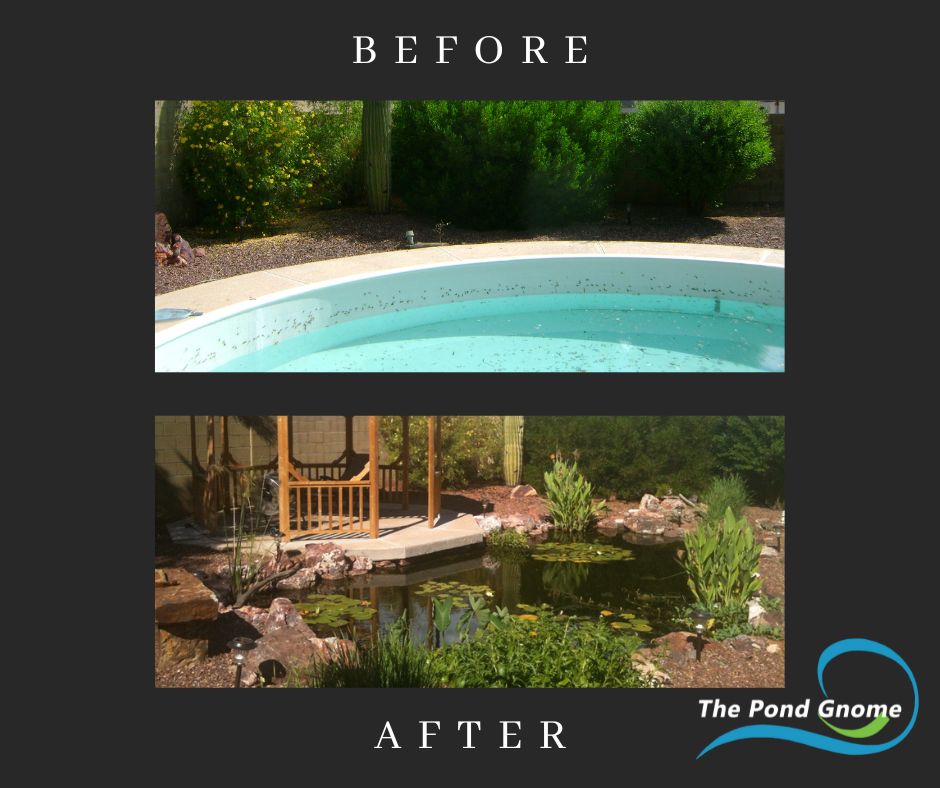
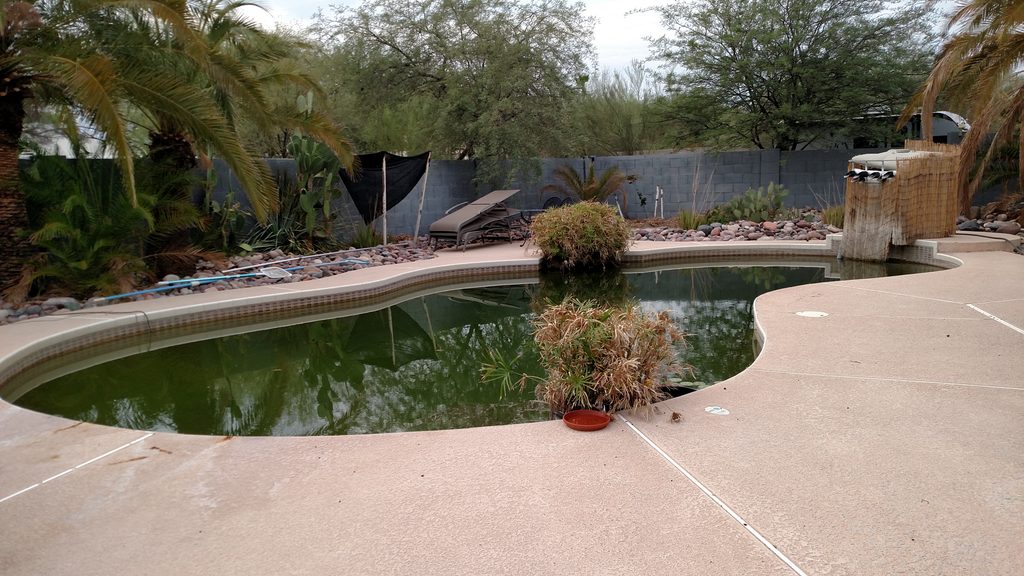
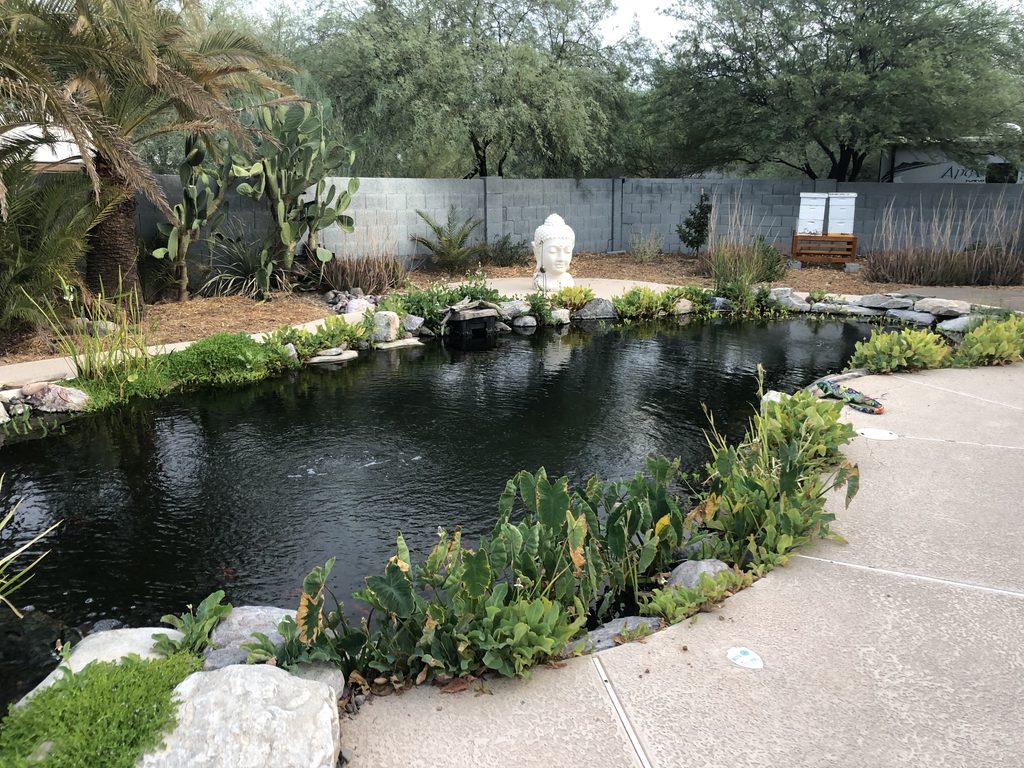
Yes, an old swimming pool can be converted into a koi pond—but a successful conversion involves much more than turning off the chlorine and tossing in a few fish.
A swimming pool is designed to be a chemically sanitized container. A koi pond needs to be water free of oxidizing chemicals like chlorine. To make the change, the old pool must be drained and cleaned, the structure and plumbing evaluated, and the circulation and filtration redesigned to support fish, aquatic plants and beneficial microorganisms. With the right design, an outdated or underused pool can become a beautiful, natural-looking koi pond and backyard aquatic habitat.
Here in Phoenix, a thoughtfully designed pool-to-pond conversion can replace an aging backyard chore with living water that you may enjoy every day of the year.
Yes—But It Needs to Become a Pond, NOT Just a Neglected Pool
We occasionally hear a version of this plan: “We’ll quit adding chlorine, put some plants in the pool and let nature take over.”
Nature will take over. She just may not create the clear water, healthy koi pond you envisioned.
Without proper circulation, oxygen, and biological filtration, an abandoned swimming pool can become a stagnant body of water filled with algae, organic debris and mosquitoes. Koi add another consideration: they are large, active fish that eat, grow, and produce a significant biological load.
A true conversion deliberately changes how the water is managed. The goal is no longer to kill nearly everything in the water with sanitizer. The goal is to build a balanced system in which water movement, biological filtration, plants, rock and gravel, fish and microorganisms work together to keep your pond water pleasant to look at.
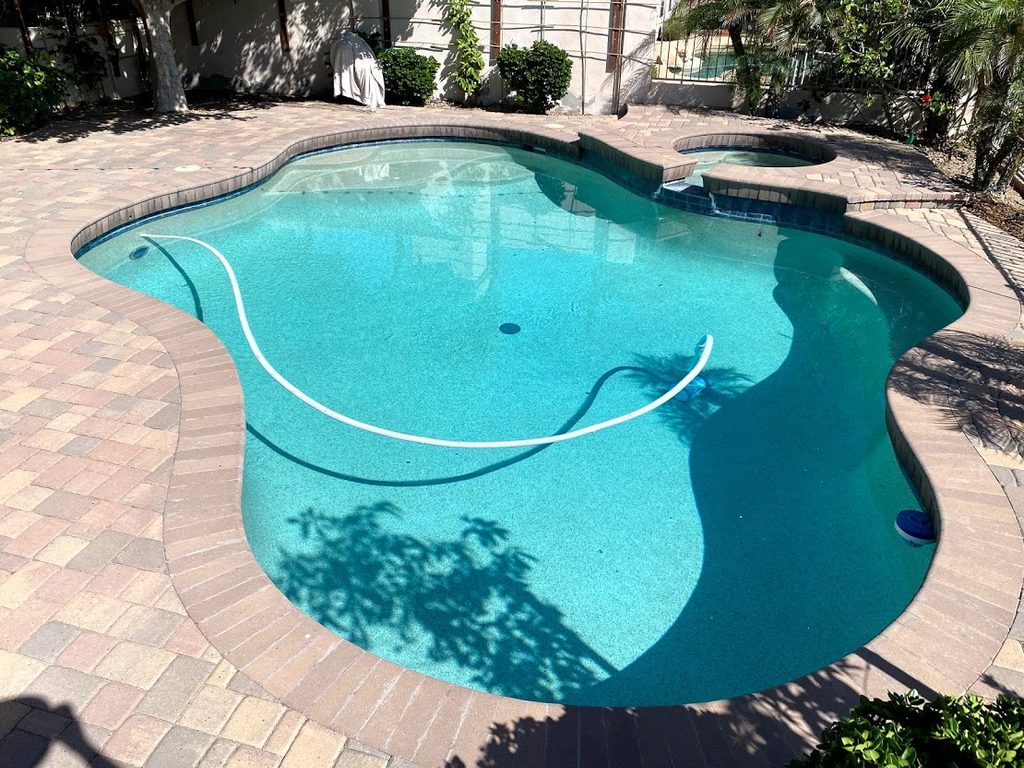
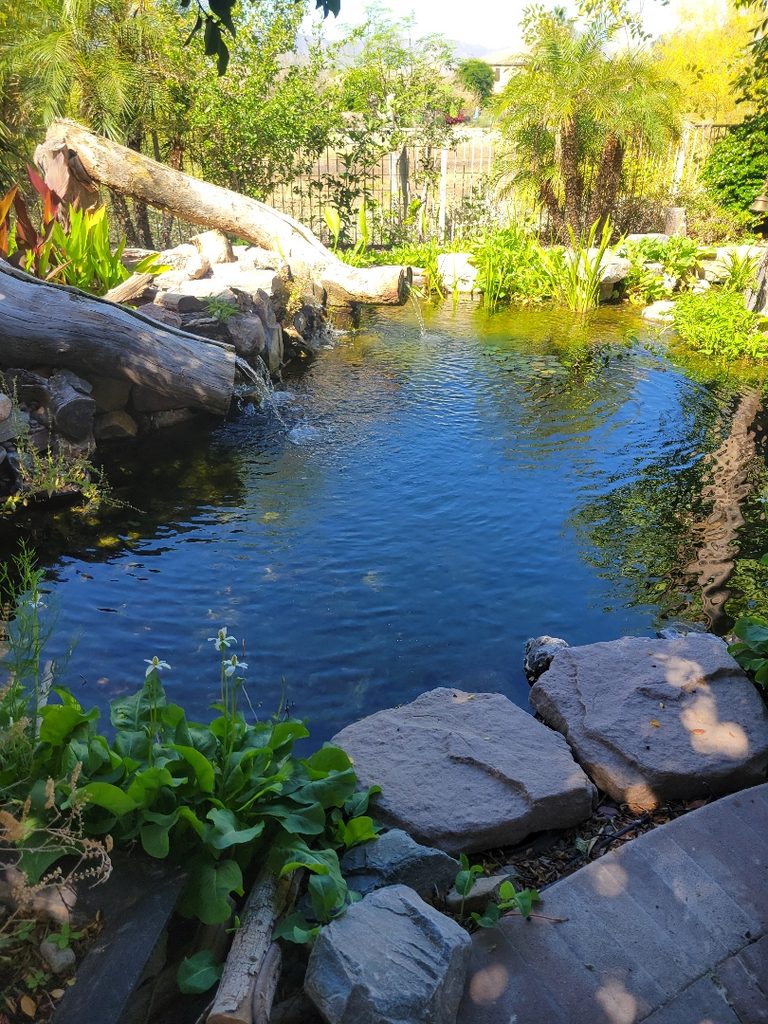
The five essential elements of a balanced ecosystem pond:
- Proper water circulation
- Mechanical and biological filtration
- Fish
- Aquatic plants
- Rock and gravel that provide habitat for beneficial bacteria
Those principles still apply when the pond begins life as a swimming pool. The existing concrete shell gives us a starting point, and it will need additional infrastructure to keep healthy water for fish..
Why Convert an Old Pool Into a Koi Pond?
An old pool often reaches a point where it is taking more from the homeowner than it gives back. The plaster may be failing, the equipment may be outdated and the family may swim only a couple times per year—yet the bills and maintenance keep coming.
Converting it into a koi pond may make sense when:
- The pool is rarely, if ever used for swimming.
- Major repairs or resurfacing are approaching.
- You are tired of buying and balancing pool chemicals.
- You would rather look at a natural water garden than a sterile blue/green rectangle.
- You enjoy koi, aquatic plants, birds, dragonflies and other wildlife.
- You want the sound of a waterfall and a more relaxing backyard atmosphere.
- You would prefer to reuse the existing space instead of demolishing and filling the pool.
A pool-to-pond conversion can preserve much of the existing basin while completely changing the experience of the backyard. Instead of maintaining water you feel obligated to swim in, you create living water that gives you something to enjoy every morning, evening and in every season.
What Has to Change During a Pool-to-Koi-Pond Conversion?
Every pool is different. Its age, condition, shape, depth, plumbing and access will determine what can be reused and what needs to be changed. Most successful projects address the following areas.
1. Remove the Pool Chemicals
Before fish, plants or beneficial bacteria enter the system, residual chlorine, algaecides and other pool treatments must be removed.
The process generally includes:
- Completely draining the pool
- Removing sediment and accumulated debris
- Thoroughly cleaning or pressure-washing appropriate surfaces
- Evaluating whether chemical residues or old finishes present a problem
- Sealing the surfaces with a fish safe product
- Refilling and conditioning the water before livestock is introduced
This is not a step to rush. Koi depend on water quality, and a chemical level that seems insignificant to us may still harm tender fish gills.
2. Inspect the Existing Structure
An old concrete shell can be a valuable asset—but only if we understand what condition it is in.
A professional evaluation may look for:
- Structural cracks or movement
- Deteriorated plaster, tile or coping
- Leaking penetrations and plumbing
- Sharp or unstable surfaces
- Safe access into and around the water
- Areas that may collect debris or develop poor circulation
Depending on the condition and design, the pool shell may be repaired and adapted, modified extensively, or covered with a pond-safe liner system. There is no single answer that is right for every pool.
3. Replace Pool Filtration With Pond Filtration
Swimming pool equipment is built around chemical sanitation. Pond filtration must continually process organic material and support the bacteria that convert fish waste into less harmful compounds.
A pool-to-pond filtration design may include:
- A skimmer or intake bay to collect floating debris
- A properly sized pump and circulation system
- Biological filtration like a constructed wetland filter
- Aeration to maintain dissolved oxygen
- A waterfall or stream to add sound, aesthetics and oxygen
The correct system depends on pond volume, fish load, desired waterfall flow, sun exposure and how much maintenance the owner is willing to perform. Bigger is not automatically better, but undersized filtration is always disappointing and problematic.
4. Improve Circulation and Eliminate Dead Zones
Swimming pools are often long, deep and geometrically simple. Once they contain plants, rockwork and fish, their circulation needs can change considerably.
The design should move water throughout the pond and toward the intake without leaving stagnant areas. This may require:
- Reworking or abandoning portions of the old pool plumbing
- Adding new suction and return locations
- Positioning the waterfall opposite the intake
- Using underwater returns or aeration in deeper areas
- Designing rockwork so it guides rather than blocks water movement
Phoenix heat makes oxygen and circulation especially important. Warm water holds less dissolved oxygen than cool water, while koi and the bacteria processing their waste still need oxygen around the clock.
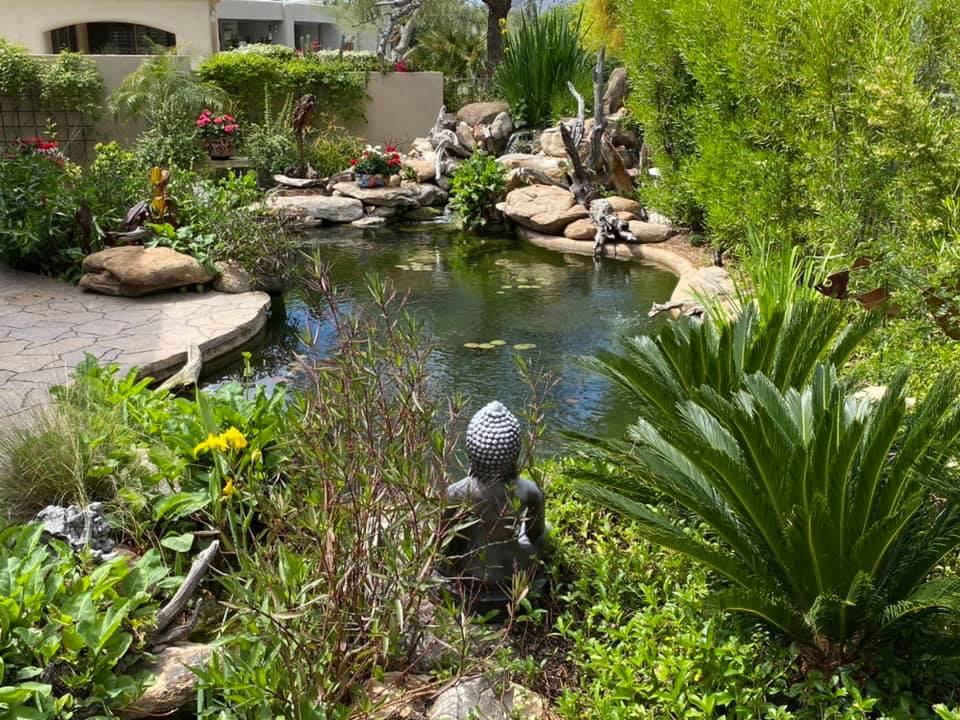
5. Naturalize the Pool’s Appearance
A pool can function as a fish-holding basin without looking much like a pond. A true backyard transformation goes further.
Naturalizing features may include:
- Boulders and gravel
- A waterfall, stream or both
- Planting pockets and aquatic shelves
- Irregular edges that soften the pool’s original geometry
- Terrestrial landscaping that connects the pond to the yard
- Underwater and landscape lighting
- Seating areas positioned for viewing and feeding the koi
This is where a tired swimming pool can stop looking like a repurposed structure and begin feeling like a destination.
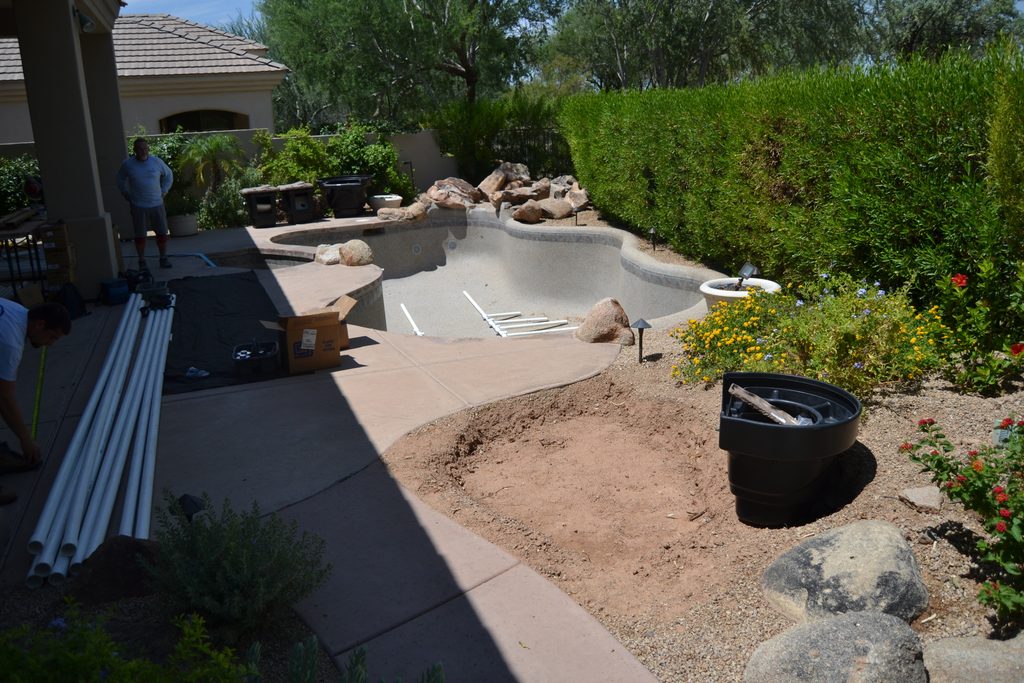
6. Add Plants, Bacteria and Fish in the Right Order
A new ecosystem needs time to establish. Filling the pond and immediately adding a large collection of koi can overwhelm biological filtration before beneficial bacteria have colonized the system.
A responsible startup plan may involve:
- Conditioning new water and testing its chemistry
- Starting the circulation and aeration systems
- Introducing beneficial bacteria
- Installing appropriate aquatic plants
- Allowing the biological filter to begin maturing
- Adding koi gradually while monitoring ammonia, nitrite, pH and temperature
The koi are usually the stars of the show, but they should not be the first members of the crew to arrive for work.
Is a Swimming Pool Too Deep for Koi?
Not necessarily. Koi can benefit from generous water volume and depth, particularly in Arizona, where deeper water may offer more stable temperatures. However, depth alone does not make the habitat safe or healthy.
A deep former pool still needs:
- Strong circulation throughout the entire water column
- Adequate aeration, especially during hot weather
- Safe access for maintenance and fish retrieval
- Shelves or protected planting areas when aquatic plants are included
- A plan for debris that settles in the deepest portions
- Protection from pumps, drains or openings that could trap fish
The existing deep end may be useful, but it has to be included intentionally in the hydraulic and maintenance design.
Can the Existing Pool Pump, Filter and Plumbing Be Reused?
Sometimes portions of the plumbing can be reused, but it is rarely wise to assume that all of the old equipment should stay.
Traditional pool filters are designed to trap fine particles in chemically treated water. They may require frequent cleaning or backwashing when asked to process leaves, algae, fish waste and other organic material from a living pond. Some pool pumps also consume considerably more electricity than modern pond pumps intended for continuous operation.
Before reusing anything, evaluate:
- The condition and location of every pipe
- The pump’s flow, head pressure and energy consumption
- Whether the filter supports biological activity
- Ease of routine cleaning
- The consequences of a buried plumbing leak
- Whether the system can operate continuously and economically
Salvaging a component only saves money if it performs the new job reliably. Keeping the wrong equipment can make the converted pond harder and more expensive to own.
Will a Converted Pool Use Less Maintenance and Fewer Chemicals?
A properly designed ecosystem pond generally relies far less on chemical control than a swimming pool, but “low maintenance” does not mean “no maintenance.”
Typical koi pond care includes:
- Emptying a skimmer basket or intake debris area
- Removing excess leaves and organic material
- Checking pumps, aerators and filters
- Testing water when conditions or fish behavior change
- Trimming and dividing aquatic plants
- Managing the koi population and feeding responsibly
- Adding beneficial bacteria or other pond-safe treatments as needed
The big difference is philosophical as much as practical: a swimming pool fights biology, while an ecosystem pond uses biology. You are managing a living environment, not trying to keep a sterile one.
What Does a Pool-to-Koi-Pond Conversion Cost?
The honest answer is that it depends on what we find and what you want to create. Asking for one standard price is a little like asking, “How much does a car cost?” A basic commuter and a custom luxury vehicle both have four wheels, but that does not make them the same project.
The cost is influenced by:
- Pool size, depth and structural condition
- Access for crews, machinery, rock and soil
- Demolition and disposal requirements
- Whether the existing waterproofing or plumbing can be used
- Filtration and circulation requirements
- The intended number and size of koi
- The clients aesthetic expectations
- Waterfall, stream and wetland-filter design
- Aquatic and surrounding landscaping
- Lighting, controls and other finishing details
The Pond Gnome currently advises that Phoenix-area pool conversions begin around $35,000, with the final investment determined by the pool and design. A site evaluation is the responsible way to establish realistic options and pricing.
Is Every Old Swimming Pool a Good Candidate?
No—and an honest pond contractor should be willing to say so.
A conversion may be less practical when:
- The shell has serious structural failure.
- Access makes the required work prohibitively difficult.
- Local codes or property restrictions prevent the proposed design.
- The owner expects a zero-maintenance system.
- The budget cannot support appropriate filtration and life-support systems.
- The owner may want a swimming pool again in the near future.
In some situations, partial demolition, a smaller pond within the former pool area, or full pool removal may be the better long-term choice. The goal is not to force every pool into becoming a pond. The goal is to identify the solution you will still be glad you chose years from now.
Frequently Asked Questions About Converting a Pool Into a Koi Pond
Can I just stop adding chlorine and put koi in my pool?
No. Residual chemicals must be addressed, and the pool needs continuous circulation, aeration and biological filtration before it can safely support koi. The system should be started and tested before fish are added, and then they should be added gradually.
Do I have to remove all the old pool plaster?
Not always. The answer depends on the plaster’s condition, the materials previously used in the pool and the waterproofing strategy for the new pond. A pool-conversion specialist should inspect the shell before recommending repair, coating, modification or a liner.
Can koi live in a converted saltwater pool?
Potentially, but not until the old pool water is removed and the shell and equipment are properly evaluated and cleaned. A saltwater pool is still a chemically managed swimming system; it does not automatically become fish-safe when the chlorine generator is switched off.
Will a converted pool attract mosquitoes?
A neglected, stagnant pool can attract mosquitoes. A well-designed koi pond keeps water circulating and supports fish and other organisms that make it a very different environment. Maintenance still matters, particularly in small pockets where water might stand outside the main system.
Will the koi eat all the aquatic plants?
Koi are enthusiastic foragers and may uproot or nibble plants. Plant selection, protected planting pockets, rock placement and an appropriate balance between fish and vegetation can help the two coexist.
Is a pool-to-pond conversion reversible?
Minor, equipment-only changes may be easier to reverse, but a full naturalistic conversion often includes structural modifications, rockwork, new plumbing and landscaping. It should be approached as a long-term transformation, not a temporary pool treatment.
How long does a pool-to-pond conversion take?
The construction schedule varies with the pool’s condition, access, demolition, design complexity and material availability. The ecosystem also takes time to mature after construction, so the koi population should be built gradually rather than installed all at once.
Do I need a professional to convert my swimming pool?
For a large pool intended to support valuable koi, professional design is strongly recommended. Structural concerns, hydraulics, electrical work, fish-safe materials and biological filtration all have to work together, and mistakes can be expensive to correct after rockwork and water are in place.
Conclusion: Give an Old Pool a Living New Purpose
An old swimming pool can absolutely be converted into a koi pond. Done well, the project can replace chlorine, aging pool equipment and an underused slab of blue water with koi, aquatic plants, moving water and a backyard that feels alive.
The keys to success are straightforward:
- Start with a careful inspection of the pool and its plumbing.
- Remove chemical residues before introducing aquatic life.
- Design circulation, aeration and filtration for koi—not swimmers.
- Build a complete ecosystem rather than an oversized fish tank.
- Add plants, beneficial bacteria and koi thoughtfully.
- Plan for Arizona heat and realistic long-term maintenance.
The pool shell may already exist, but the ecosystem still has to be designed and built.
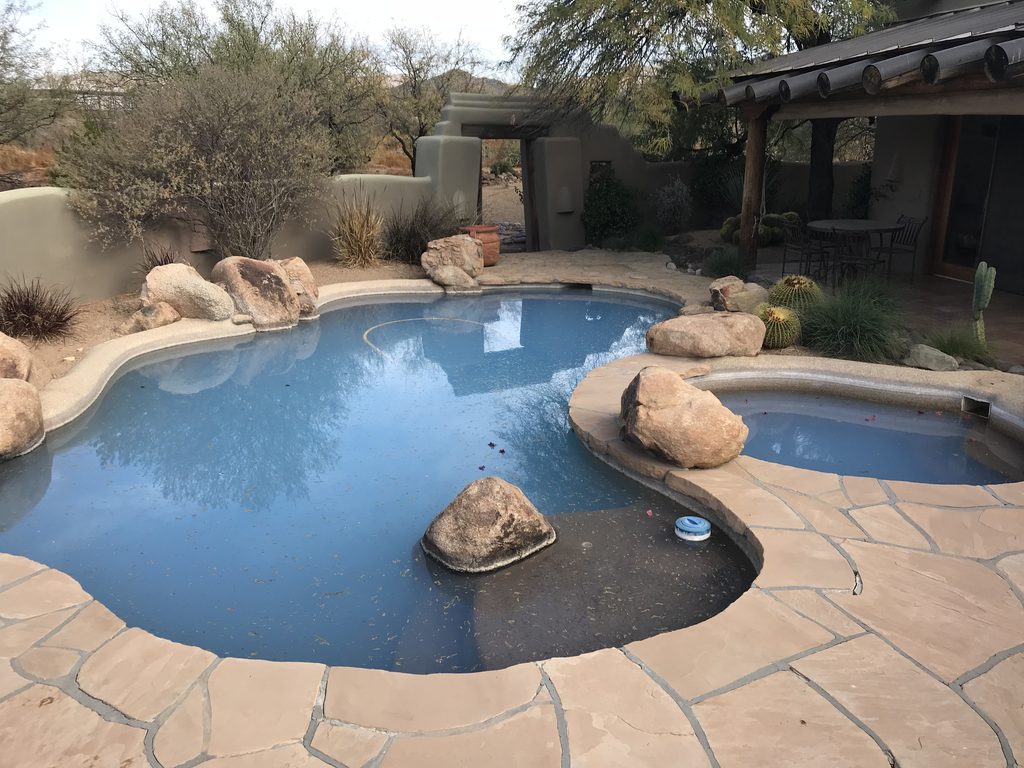
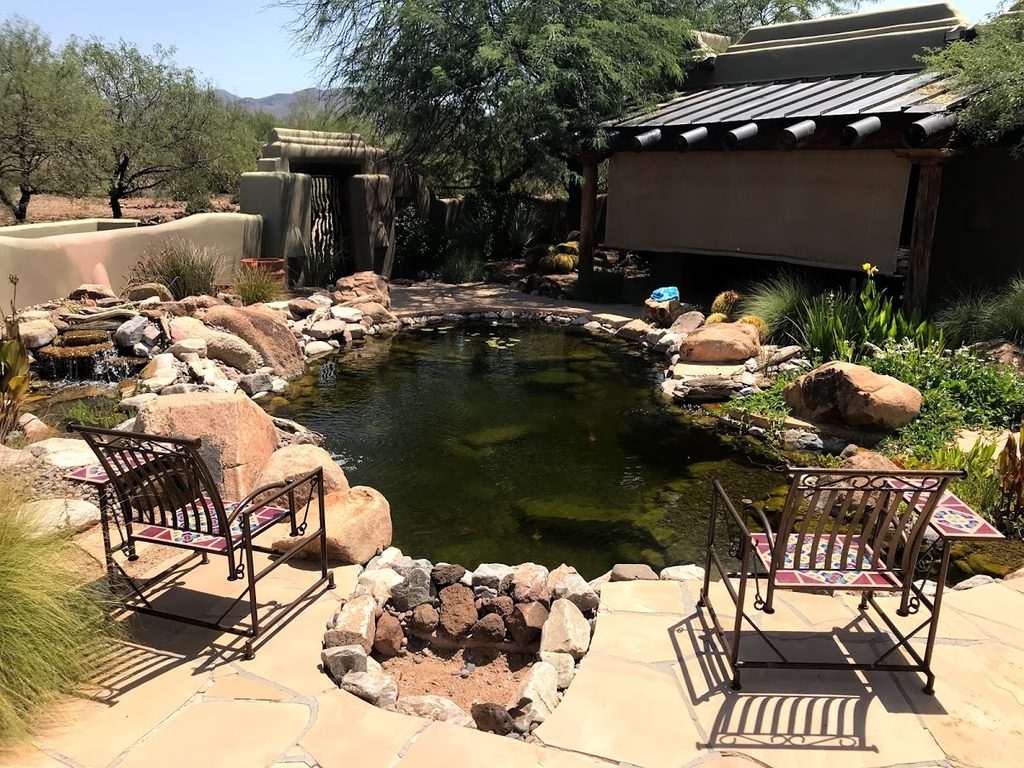
Ready to Turn Your Old Pool Into a Koi Pond?
If your swimming pool has become an expensive backyard decoration that nobody uses, let’s talk about what else it could become.
The Pond Gnome designs and builds pool-to-pond conversions, ecosystem ponds and living water features throughout Phoenix, Scottsdale, Glendale, Peoria and surrounding Arizona communities. We can evaluate your existing pool, explain what may be reusable, identify potential challenges and help you imagine a koi pond that fits both your property and the way you want to live outdoors.
Schedule a consultation with The Pond Gnome today. Let’s turn that old swimming pool into a living backyard oasis—one you will not need a swimsuit to enjoy.