

What Is a Modern Pond?
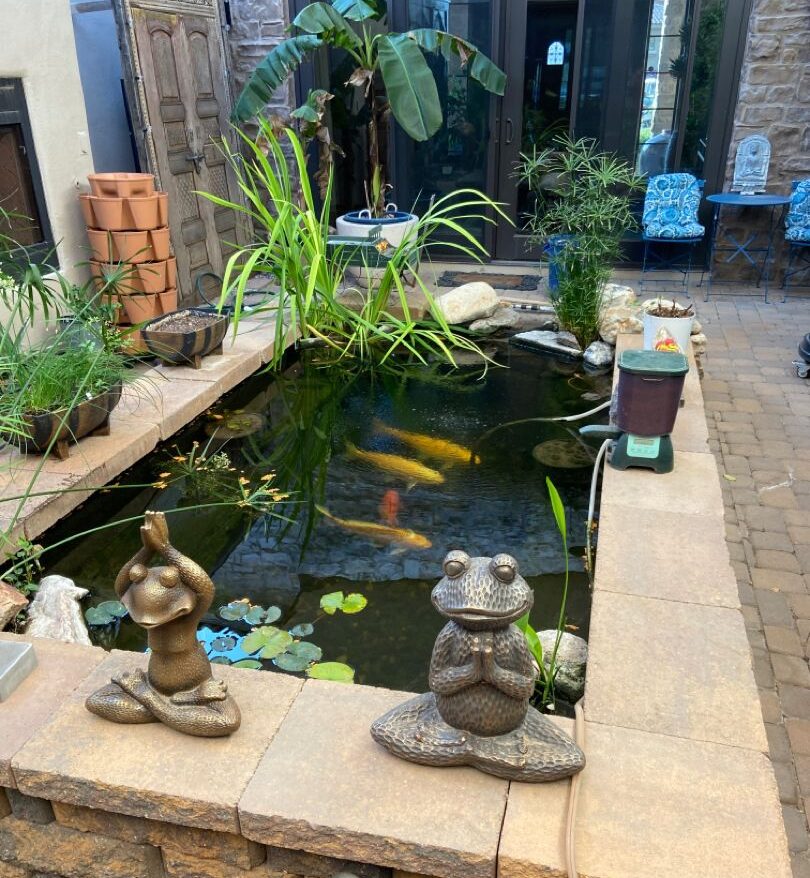
A modern ecosystem pond combines mechanical and biological filtration, circulation, aquatic plants, rocks and gravel, and an appropriate fish population to create a living water garden. Designed as a complete system, it can provide clear water, wildlife habitat, and manageable maintenance. “Modern” describes how the pond works; its appearance can be naturalistic or contemporary.
At The Pond Gnome, we like ours to look as though Mother Nature put them there before the house showed up.
Why Some Backyard Ponds Become a Chore
Remember the backyard pond that was basically a bowl-shaped hole, a liner, and a pump? Maybe somebody added a pile of mortared rocks and called it a waterfall.
Then came the green water. The disappearing fish. The weekend spent cleaning something you installed to help you relax.
Ain’t nobody got time for that!
The trouble usually starts when a pond is treated as a collection of parts instead of a complete living system. Common design shortcomings include:
- Inadequate filtration:** Waste and debris accumulate faster than the system can handle them.
- Poor circulation:** Water movement fails to serve the whole pond.
- Too many fish:** The biological load exceeds the pond’s capacity.
- Too few aquatic plants:** A useful part of the ecosystem is missing.
- Difficult service access:** Simple maintenance becomes an excavation project.
Concrete and flexible liners can both have a place in water-feature construction. Neither material, by itself, guarantees a successful pond. Design, installation, and ongoing care matter.
How Does a Modern Ecosystem Pond Work?
Aquascape, Inc.’s ecosystem approach brings together five connected elements: filtration, circulation, rocks and gravel, plants, and fish. Each contributes to the whole.
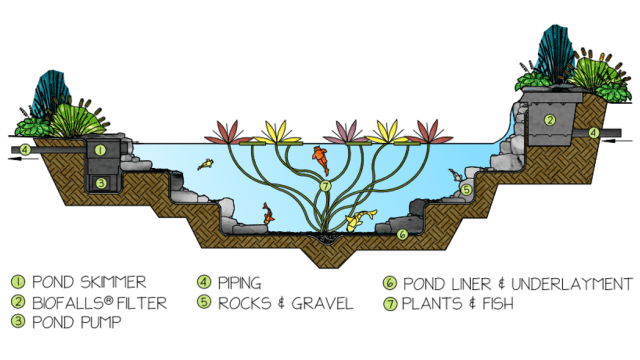
1. Mechanical and Biological Filtration
These filters do different jobs:
- Mechanical filtration** captures debris so it can be removed. A pond skimmer collects floating material before it sinks and decomposes.
- Biological filtration** provides surfaces for beneficial bacteria that process dissolved wastes.
- A BioFalls® filter** can combine biological filtration with the beginning of a waterfall.
The goal is to remove what should leave the pond while supporting the organisms that help process what remains.
2. Circulation
A pump does more than make a waterfall look pretty. It moves water through filtration and helps support oxygen exchange.
Good planning considers:
- Pond volume and fish load.
- Filter operating requirements.
- Plumbing size, length, and elevation changes.
- Waterfall flow and sound.
- Access for pump servicing.
Buying the biggest pump on the shelf is no substitute for designing the system.
3. Rocks and Gravel
Properly installed rock and gravel help naturalize the pond and provide additional surface area for beneficial bacteria.
Thoughtful stonework also creates the visual transition between water and landscape. The shoreline should feel connected to the yard, rather than looking like somebody dropped a bathtub into it.
4. Aquatic Plants
Plants earn their place in a water garden. They take up nutrients, add seasonal interest, and create habitat.
A planting plan might include:
- Water lilies for floating foliage and flowers.
- Marginal plants along shallow shelves.
- A mix of textures and heights that frames the water without hiding it.
Choose plants for the site and climate, and leave room for growth. That cute little plant may have big plans.
5. An Appropriate Fish Population
Fish bring movement and personality, but they also produce waste. Stocking should match the pond’s volume, filtration, and maintenance goals.
Plan for adult fish size. Those little koi won’t stay little forever.
Is a Modern Pond Really Low Maintenance?
A properly designed ecosystem pond can reduce maintenance, but it still needs care. “Low maintenance” means a manageable routine, with equipment you can reach and a system you understand.
Typical tasks include:
- Emptying the skimmer basket as debris collects.
- Checking water level and pump flow.
- Trimming plants and removing excess organic material.
- Watching fish behavior and checking water quality when needed.
- Servicing equipment and scheduling cleanouts according to conditions.
Your maintenance needs depend on fish load, feeding, nearby trees, weather, and system design.
We believe pond ownership should come with an explanation. The Pond Gnome offers maintenance services and ecosystem packages that include planting, client training, and system checks to help homeowners get started.

What Should a Modern Pond Include in Phoenix?
A Phoenix pond deserves a design suited to its setting. Before choosing its size or waterfall, discuss:
Sun and shade. Where will the pond receive direct sun, and how will plants and surrounding landscaping affect it?
- Water replacement. How will you monitor and replenish water lost to evaporation?
- Debris. What might blow or wash into the pond?
- Viewing areas. Can you enjoy it from the patio, kitchen, or favorite chair?
- Service access. Can you reach filters and pumps without performing backyard gymnastics?
- Your priorities. Are you most interested in koi, gardening, visiting wildlife, or the sound of water?
At The Pond Gnome, these answers help shape a water feature around how you want to use your backyard.
Can a Modern Pond Support Wildlife?
A living pond can provide water and habitat for birds and other visiting wildlife. Plants, shoreline details, and nearby cover help determine how animals use the space.
For a habitat-focused design, consider:
- Shallow areas where birds can approach the water.
- Plantings that provide cover without blocking your view.
- A balance between wildlife access and fish protection.
Nature does not operate on an invitation-only basis. If you want visiting birds and dragonflies, talk through the other wildlife possibilities, too.

How Long Will a Modern Pond Last?
A well-built pond can provide many years of enjoyment. Its useful life depends on materials, workmanship, site conditions, and care.
A promise that every component will last a lifetime deserves a few follow-up questions. Pumps and other equipment eventually need service or replacement.
Before investing, ask:
- What liner, underlayment, and filtration components are specified?
- How are the liner and plumbing protected?
- Can equipment be replaced without dismantling the waterfall?
- What warranties apply?
- Who will service the pond after construction?
Durability includes being able to maintain what you own.
Frequently Asked Questions About Modern Ponds
Does a modern pond have to look sleek and geometric?
No. Modern equipment and ecosystem design can support a natural-looking water garden. Choose an appearance that complements your home and landscape.
Will an ecosystem pond stay clear all the time?
Water clarity varies with ecosystem maturity, weather, feeding, debris, and maintenance. Good design supports clear water, but no responsible builder should promise that a living pond will never develop algae or need attention.
Does a modern pond need chemicals?
An ecosystem pond relies on filtration and biological processes rather than a swimming-pool sanitation routine. Water conditioners, beneficial bacteria, or targeted treatments may still be appropriate. “Chemical-free forever” is too broad a promise.
Can I update an existing pond?
Often, yes. An assessment can identify whether improved filtration, circulation, planting, or service access would help. Some ponds benefit from targeted upgrades; others need more extensive remodeling.
Can you build a pond in a small backyard?
Yes, depending on the space and your goals. A compact water garden or pondless waterfall may provide the experience you want. Leave room for equipment access and mature plants when comparing options.
Conclusion: Better Design Makes Pond Ownership More Enjoyable
A modern pond brings durable construction, accessible equipment, and a living ecosystem together. Filtration, circulation, plants, stone, and an appropriate fish population all contribute to a water garden you can enjoy caring for.
You deserve a backyard feature that makes you want to pull up a chair.
Ready to Find Out What Belongs in Your Backyard?
The Pond Gnome designs, builds, remodels, and maintains living water features for Phoenix-area homeowners.
Explore our portfolio, then send us photos of your space and tell us what you have in mind. A quiet pond beside the patio? A waterfall you can hear from the kitchen? A tired old pond that needs a fresh start?
Contact The Pond Gnome to start the conversation. Let’s give you a reason to spend more time outside!