
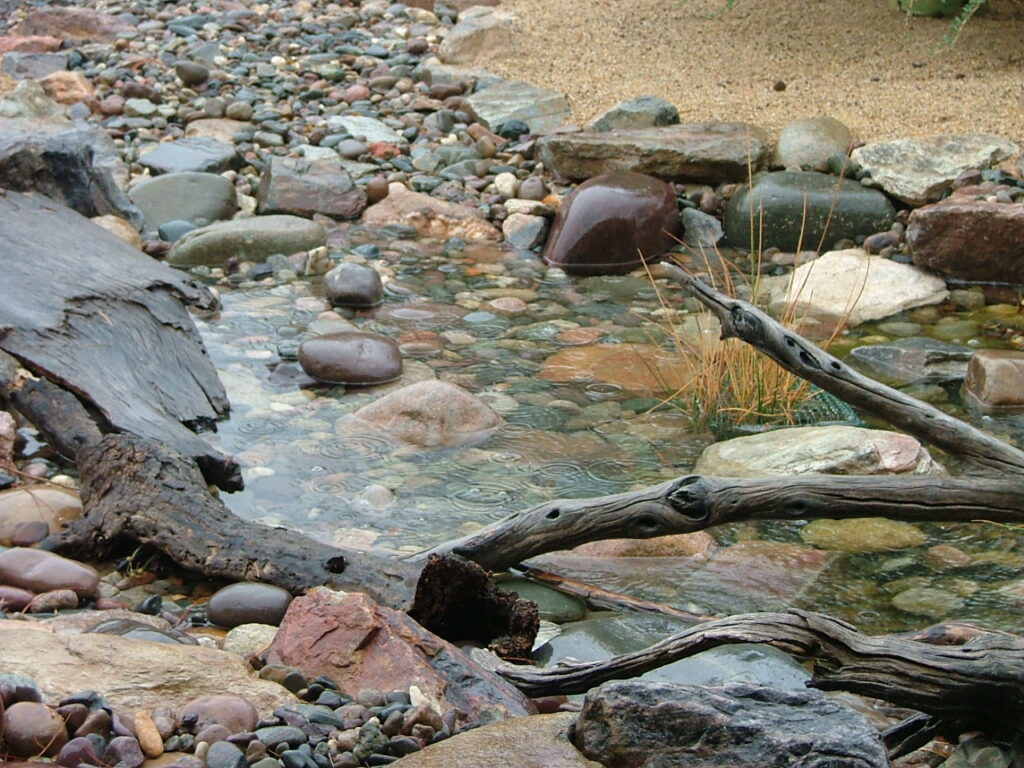
Can You Harvest Rainwater in Phoenix Without a Rain Barrel?
Yes! Modern rainwater harvesting systems can collect runoff, filter out debris, and store water underground for outdoor reuse. That stored water can supply a recirculating fountain or pondless waterfall and, with suitable plumbing, help water your landscape. The Pond Gnome designs these systems for Phoenix-area properties, combining hidden storage with water features you can enjoy every day.
Being a better steward of the desert doesn’t require growing all your own food, rebuilding your house, or convincing your HOA that backyard chickens are a fabulous idea.
Sometimes, it starts with giving the rain somewhere useful to go instead of into the sewer system.
And no, that doesn’t have to mean parking a big ugly plastic barrel next to your patio.
What Is Modern Rainwater Harvesting?
Rainwater harvesting means collecting rainfall for use on your property instead of allowing it to immediately run away.
There are two basic approaches:
- Passive harvesting: Landscape contours, basins, and swales direct rainfall into planted areas, where it soaks into the soil.
- Active harvesting: A collection system moves water into a storage reservoir so you can use it later.
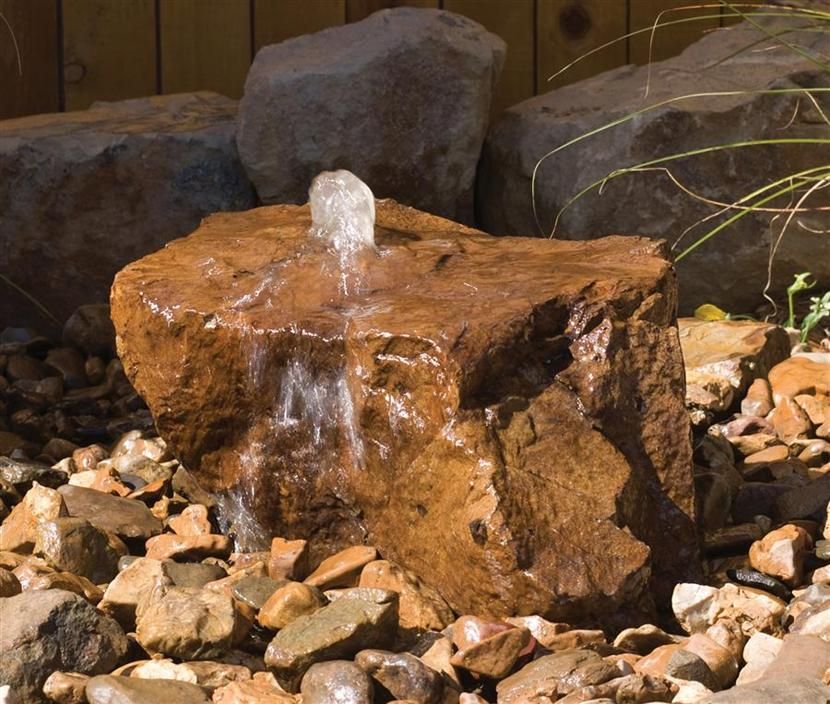
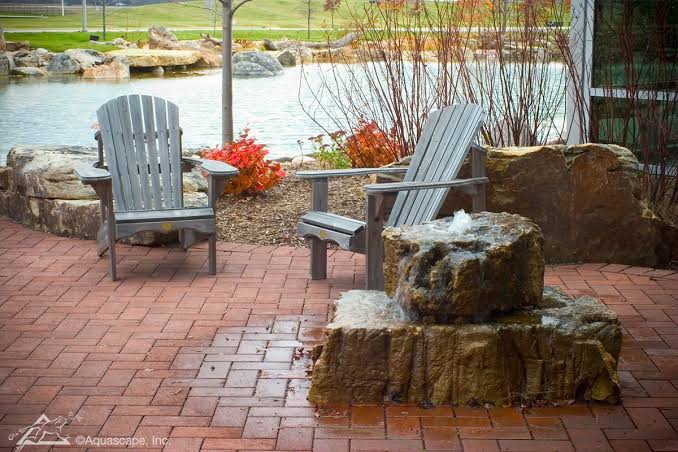
An underground system takes the storage out of sight. Above ground, you might see a bubbling boulder, a fountain, or a stream disappearing into gravel.
Below ground? That’s where the practical magic happens.
Aquascape, Inc.’s Rainwater Harvesting System, previously branded RainXchange, combines underground storage with a decorative water feature. Its modular design allows storage to be configured for different residential and commercial applications.
At The Pond Gnome, we like the idea of conservation that also gives you a reason to spend more time outside.
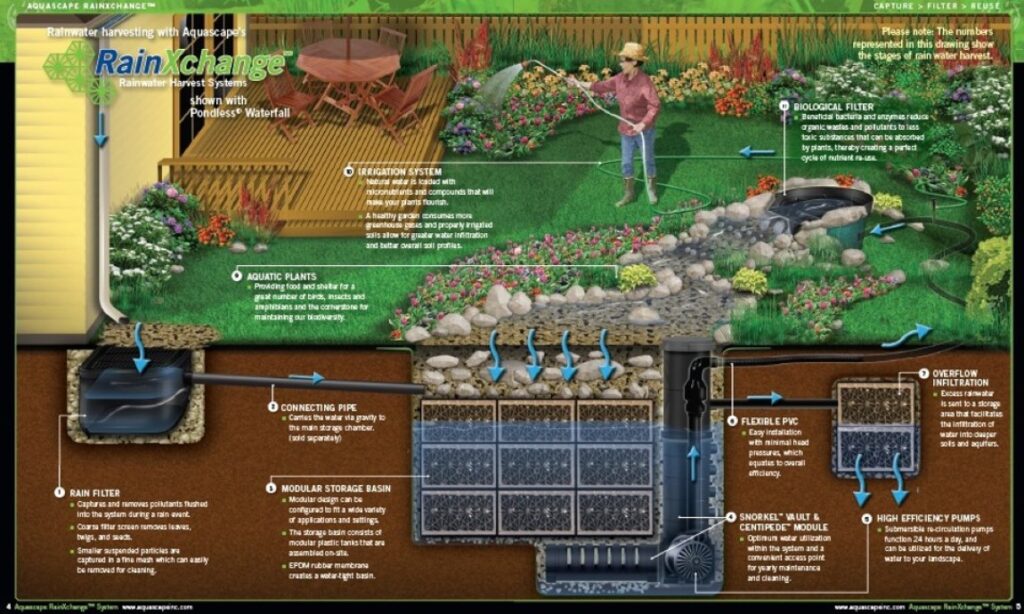
How Does an Underground Rainwater Harvesting System Work?
A successful installation needs more than a hole, a liner, and a prayer for rain.
The main components work together:
- Collection area: Usually a roof connected to gutters and downspouts. Other runoff sources require evaluation for their intended use.
- Pre-filter: Intercepts leaves and debris before they enter storage.
- Underground reservoir: Holds captured water in a lined storage area.
- Accessible pump vault: Provides a service point for the pump and related equipment.
- Recirculating water feature: Returns water through a fountain, waterfall, or stream, keeping it fresh and biologically available for pets or wildlife.
- Reuse connection: Optional plumbing delivers stored water to suitable outdoor uses.
- Overflow: Gives excess water a planned route when storage fills.
Aquascape’s downspout filter is designed to intercept debris carried from the roof during rainfall before it reaches the reservoir. That first stage matters: keeping material out is easier than removing it from underground storage later.
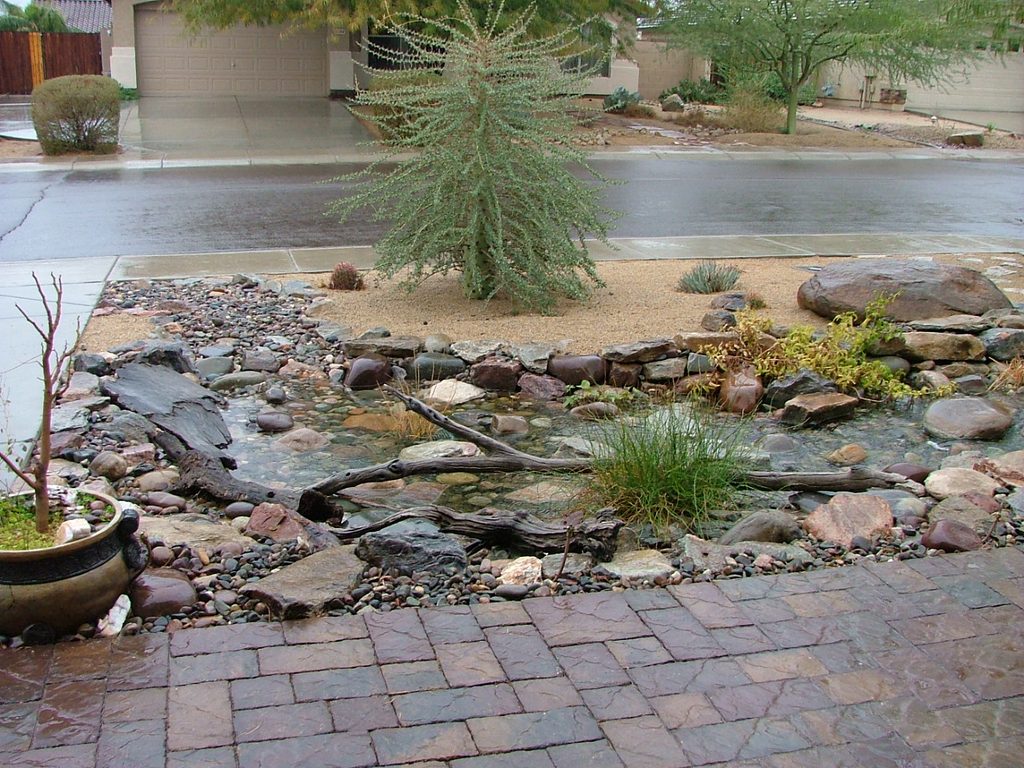
Does Phoenix Get Enough Rain to Make Harvesting Useful?
Phoenix rainfall can provide useful water, even though it cannot be counted on to meet every outdoor water need.
We desert rats know the routine: weeks of watching the sky, followed by a storm that makes everyone wonder where they left the umbrella.
The opportunity is capturing some of that water when it arrives, which is often all at once!
For perspective, Aquascape estimates that one inch of rain falling on a 2,000-square-foot roof generates approximately 1,250 gallons of water. Actual collection will be lower because of system losses, overflow, and other site conditions.
How useful that becomes depends on:
- How much roof area drains into the system.
- How much empty storage is available when it rains.
- How quickly you use the captured water.
- How long the dry stretches last.
- How much water the feature loses to evaporation and splashing.
A reservoir already full cannot capture another reservoir’s worth of rainfall. Likewise, a large empty tank cannot collect rain that doesn’t fall.
Good design accounts for both realities.

What Can You Do With Harvested Rainwater?
With a system designed for the purpose, stored rainwater can help supply:
- A pondless waterfall or recirculating stream.
- Decorative fountains and bubbling stones.
- Landscape watering.
- A garden hose connection for suitable outdoor tasks.
The Pond Gnome’s rainwater harvesting services include water feature supply and outdoor reuse options.
Decide how you want to use the water before choosing equipment. Watering a tree and supplying a decorative waterfall involve different delivery needs.
Also, recirculation and decorative filtration do not make harvested runoff drinking water. Collection surfaces and water quality need to suit the intended use.
Can Rainwater Storage Be Hidden Under Landscaping or a Patio?
Yes, when the reservoir and everything above it are designed for that application.
Aquascape’s AquaBlox storage modules provide structural void space for underground water storage. They allow more water to fit within a reservoir footprint than gravel alone.
Possible locations may include:
- Landscape areas.
- Gravel-covered spaces.
- Appropriately designed patios or paved areas.
Vehicle areas require particular attention to loading, cover depth, and the complete installation specifications. A storage module’s strength rating alone doesn’t make every driveway installation appropriate.
And hidden equipment still needs access. Nobody wants to dismantle a patio just to service a pump.
How Do You Get Started With Rainwater Harvesting?
Start with the property and your goals. The fun waterfall discussion comes shortly—we promise.
Before choosing reservoir size, consider:
- Collection: Where does rainfall currently go?
- Demand: What do you want the stored water to supply?
- Location: Where can storage fit without creating access or drainage problems?
- Site conditions: What utilities, structures, soil conditions, or trees affect excavation?
- Approvals: What requirements apply to gutters, excavation, electrical work, and visible landscape changes?
- Overflow: Where will water go during a storm that exceeds capacity?
- Dry weather: How will the system operate when harvested water runs low?
An underground reservoir can reduce the visual concerns associated with above-ground tanks, but HOA approval should never be assumed.
The Pond Gnome can help connect these practical decisions with the part you’ll actually see and enjoy: the water feature.
What Maintenance Does a Rainwater Harvesting System Need?
Rainwater harvesting is manageable maintenance, not maintenance-free magic.
A practical care plan includes:
- Gutters and downspouts: Remove accumulated leaves and debris regularly.
- Pre-filters: Inspect and clean according to manufacturer guidance and actual debris loads.
- Pump and vault: Check access, operation, and sediment buildup.
- Overflow: Keep its route clear.
- Water feature: Watch for reduced flow, excessive splashing, or unusual water loss.
- Storage: Schedule sediment removal when inspection shows it is needed.
In Phoenix, inspecting the collection path before monsoon season and after debris-heavy storms is a sensible habit.
Avoid assuming that every filter needs cleaning only once a year or that every vault can wait a fixed number of years. A roof beneath shedding trees has a different maintenance workload than one with little overhead vegetation.
Frequently Asked Questions About Phoenix Rainwater Harvesting
Will rainwater harvesting lower my water bill?
It can reduce purchased water use when captured rain replaces water you would otherwise use. Savings depend on rainfall, storage, demand, and system operation. A decorative feature also has evaporation losses, so savings should be evaluated realistically.
Can I have a system if I live in an HOA?
Very possibly. Underground storage offers an unobtrusive option, but review your HOA’s requirements before making changes.
Do I need a waterfall to harvest rainwater?
No. Rain barrels, standalone cisterns, and passive landscape harvesting are other options. A recirculating water feature adds enjoyment and is part of Aquascape’s integrated harvesting approach.
Will a waterfall keep the stored water clean?
Circulation and filtration help manage stored water, but debris control and maintenance still matter. Moving water alone does not remove every contaminant.
What happens when the reservoir fills?
Additional runoff follows the designed overflow route. Overflow planning belongs in the original design, especially where buildings and neighboring properties could be affected.
Can harvested rainwater keep my waterfall running all year?
That depends on storage capacity, rainfall, and water losses. Phoenix’s long dry stretches mean supplemental water may be necessary.
Conclusion: Put Phoenix Rainwater to Work
Modern rainwater harvesting gives desert homeowners another way to make thoughtful use of a limited resource, in addition to sending debris “downstream” to an overworked sewer system.
The essentials are straightforward:
- Collect water from suitable surfaces.
- Filter debris before storage.
- Size the reservoir around realistic supply and demand.
- Plan for overflow, dry weather, and maintenance.
- Choose a water feature you’ll love living with.
You get the satisfaction of putting rainfall to use—and perhaps the sound of a waterfall with your morning coffee.
Granny might approve.
Ready to Turn Rainfall Into Your Favorite Backyard Feature?
Let’s find out what your property can capture—and what you’d love to create with it.
The Pond Gnome helps homeowners in Phoenix, Scottsdale, Glendale, Peoria, and surrounding communities bring water conservation and outdoor enjoyment together.
Send us photos of your yard, your downspouts, and the area you have in mind. We’ll help you explore storage, collection, and water feature options that fit your property.
Contact The Pond Gnome to start planning your rainwater harvesting project.
The next time it rains, give that water a reason to stick around.