

If you want healthier koi, better water quality, and fewer pond problems, it all starts with understanding one thing: metabolism.
Most Arizona pond owners focus on how much food they’re feeding. The real question is whether their koi can actually digest and use that food efficiently.
At The Pond Gnome, we’ve seen countless pond issues traced back to improper feeding habits. The good news? A few simple adjustments can dramatically improve fish health, water clarity, and overall pond performance.
Quick Answer
Feed koi based on water temperature, metabolism, and activity level—not the calendar. As water warms, koi metabolism increases and they require more nutrition. As water cools, digestion slows dramatically, requiring lighter feeding or even complete fasting. Overfeeding when temperatures are too high can lead to poor digestion, excess waste, ammonia spikes, and declining water quality.
Why Koi Metabolism Matters
Koi are cold-blooded fish. Unlike humans, they cannot regulate their internal body temperature. Their metabolism rises and falls with the temperature of the water around them.
When metabolism is working efficiently:
- Nutrients are absorbed properly
- Growth rates improve
- Immune systems stay stronger
- Fish develop better coloration
- Less waste enters the pond
- Biological filtration performs better
When metabolism slows and feeding doesn’t adjust:
- Food remains undigested
- Waste production increases
- Water quality declines
- Ammonia levels rise
- Fish become stressed and susceptible to disease
As highlighted in POND Trade Magazine, feeding strategy should always align with water temperature and metabolic activity to support both koi health and water quality.
The Connection Between Digestion and Water Quality
Many pond owners don’t realize that every feeding decision affects their entire ecosystem.
When koi cannot properly digest food:
- More nutrients pass through as waste
- Organic load increases
- Filters work harder
- Water becomes cloudier
- Algae growth can accelerate
Think of it this way: healthy digestion doesn’t just benefit the fish—it benefits the pond.
The cleaner the digestion process, the cleaner the water stays.
Feed by Water Temperature, Not the Calendar
One of the biggest mistakes pond owners make is feeding based on habit.
Koi don’t care what month it is.
They care about water temperature.
Above 70°F (21°C)
Metabolism is highly active.
Feed:
- High-quality growth or maintenance foods
- Multiple small feedings per day
- Protein-rich diets with highly digestible ingredients
During this period, koi efficiently convert food into growth, energy, and body maintenance.
60–70°F (15–21°C)
Metabolism remains strong but begins slowing.
Feed:
- Premium staple diets
- Moderate feeding frequency
- Observe fish behavior closely
This is often the ideal range for balanced growth and water quality.
50–60°F (10–15°C)
Digestion slows significantly.
Feed:
- Easily digestible wheat germ foods
- Smaller portions
- Reduced feeding frequency
Aquascape recommends transitioning to cold-water formulas designed specifically for cooler temperatures.
Below 50°F (10°C)
Stop feeding entirely.
At these temperatures, koi metabolism becomes extremely limited and digestion effectively shuts down. Feeding protein rich foods can result in undigested food rotting in the digestive tract, potentially causing serious health issues.
Choosing the Right Food
Not all fish foods are created equal.
According to Aquascape’s nutrition guidance, the quality and source of protein are more important than simply looking at the protein percentage on the label. Fish-based proteins are generally the most digestible and biologically appropriate for koi.
Look for foods that include:
- Fish meal as a primary ingredient
- High digestibility
- Balanced vitamins and minerals
- Stable ingredients that won’t rapidly pollute water
Avoid foods that contain excessive fillers or low-quality ingredients.
Remember: your fish can only benefit from nutrients they can actually digest.
How Much Should You Feed?
A good rule of thumb:
The Three Minute Rule
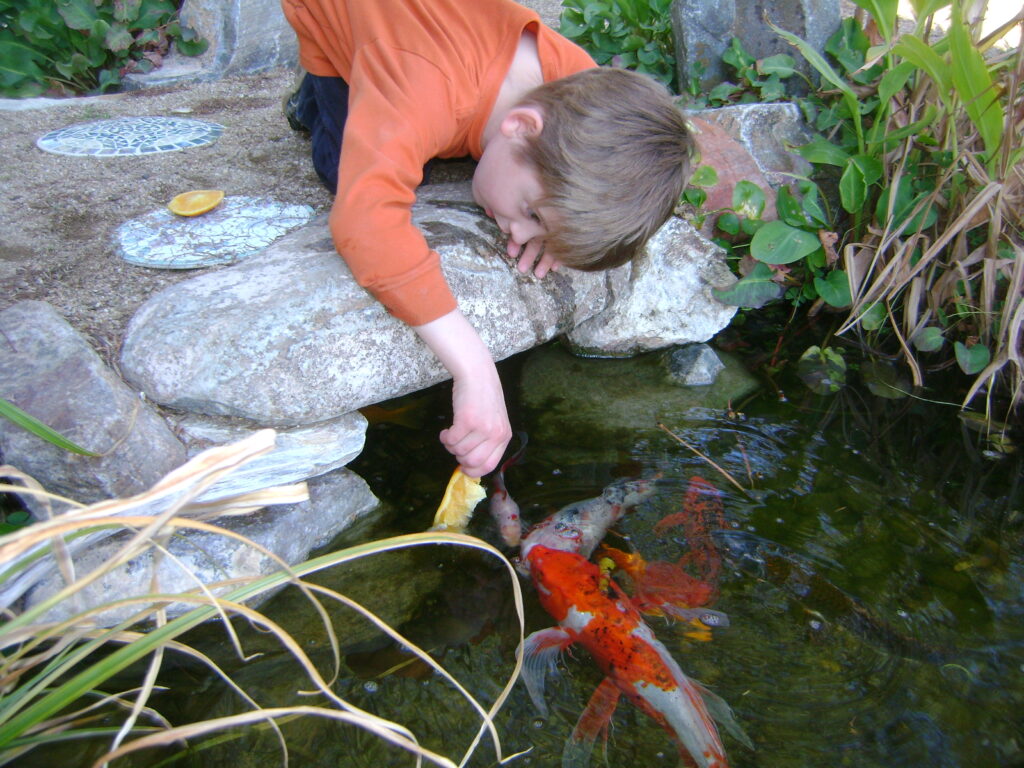
Feed only what your koi can consume within approximately three minutes.
If food remains floating after that:
- You’re feeding too much
- Water quality may suffer
- Fish health may decline over time
Overfeeding is one of the most common causes of water quality problems in ornamental ponds.
Signs Your Feeding Program Is Working
Healthy feeding habits produce visible results.
Watch for:
Healthy Indicators
- Strong appetite
- Active swimming
- Bright coloration
- Consistent growth
- Clear water
- Stable water parameters
Warning Signs
- Uneaten food in your filters
- Cloudy water
- Excess algae growth
- Fish lethargy
- Increased ammonia readings
When these warning signs appear, it’s often time to evaluate feeding practices before looking elsewhere for the problem.
Why We Recommend Premium Aquascape Fish Foods
At The Pond Gnome, we’re big believers in matching quality nutrition with seasonal fish needs.
Aquascape fish foods are formulated with highly digestible ingredients and seasonal feeding strategies in mind. Whether you’re transitioning in spring, maximizing growth during summer, or preparing fish for winter, having the right food makes a measurable difference in both fish health and pond performance.
More importantly, premium nutrition helps support:
- Efficient digestion
- Reduced waste production
- Better filtration performance
- Healthier fish year-round
That’s a win for both your koi and your pond.
Frequently Asked Questions
How often should I feed koi in summer?
Most healthy ponds can support two to four smaller feedings daily during warm weather when water temperatures are optimal and filtration is adequate.
Can koi overeat?
Yes. Koi will often continue eating when food is available. Overfeeding can lead to obesity, poor water quality, and increased filtration demands.
What is the best temperature to feed koi?
Koi digest food most efficiently when water temperatures are consistently above 60°F and especially between 68°F and 77°F.
Should I feed koi during winter?
Generally no. Once water temperatures drop below 50°F, feeding should be limited to melons, soft vegetable material and Cheerios because digestion becomes extremely limited.
Why is my pond water cloudy after feeding?
Excess food and poor digestion can increase waste production, creating additional bio load and stressing the biological filtration system.
Conclusion
Healthy koi begin with healthy metabolism.
Understanding how water temperature affects digestion allows you to feed smarter, reduce waste, improve water quality, and help your fish thrive throughout every season.
The biggest takeaway?
Feed according to metabolism, not routine.
When you match food type, quantity, and feeding frequency to your koi’s biological needs, you’ll enjoy healthier fish, cleaner water, and a more balanced pond ecosystem.
Ready to Upgrade Your Koi Feeding Program?
The Pond Gnome can help you choose the right Aquascape fish food, evaluate your pond’s seasonal feeding strategy, and ensure your fish are getting the nutrition they need to thrive.
Contact The Pond Gnome today for expert pond advice and personalized guidance that keeps your pond looking its best all year long.
Because healthy ponds start with healthy fish—and healthy fish start with smart feeding.