

Building a backyard pond in Arizona isn’t the same as building one anywhere else. The biggest mistakes that Arizona homeowners make are underestimating the Phoenix heat and evaporation, choosing the wrong location, skipping proper filtration, and not planning for long-term maintenance. Avoiding these pitfalls will save you time, money, and frustration—and help you create a pond that actually thrives in the desert.
1. Ignoring Arizona’s Extreme Heat
The Arizona sun is no joke. What works in cooler climates can fail fast here!
Common issues:
- Water overheating, stressing, or killing fish
- Algae blooms due to excessive sunlight
- Rapid evaporation shrinking your pond’s water level
What to do instead:
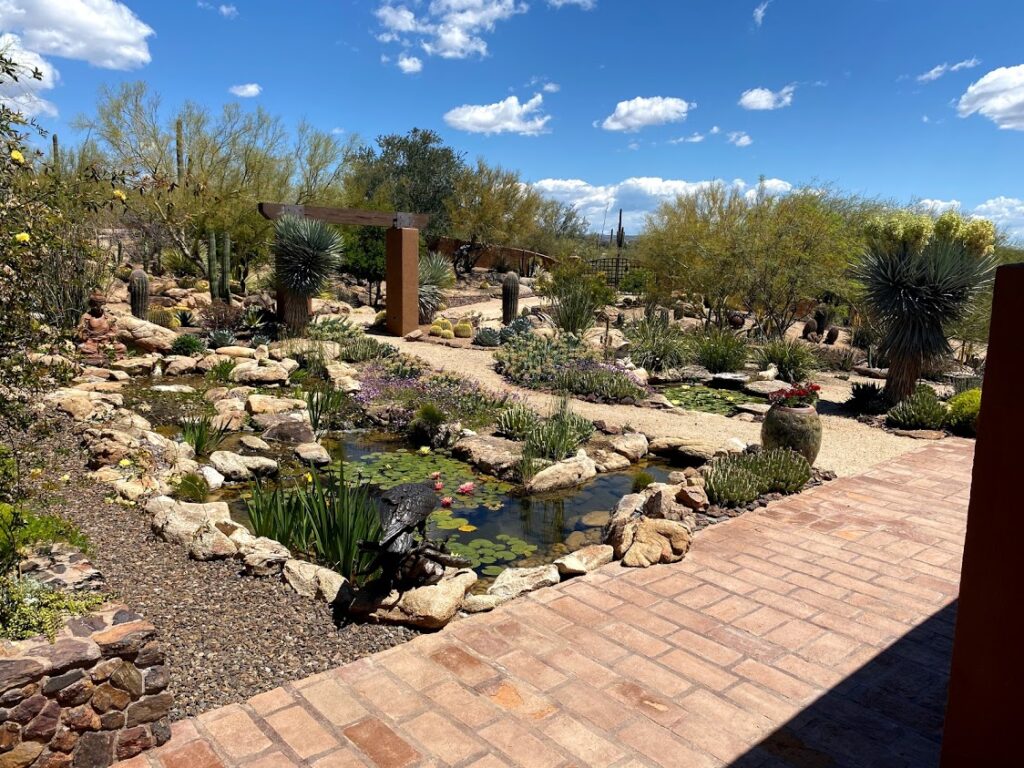
- Incorporate shade (trees, pergolas, or strategic placement)
- Build deeper areas (at least 2–3 feet) to keep water cooler
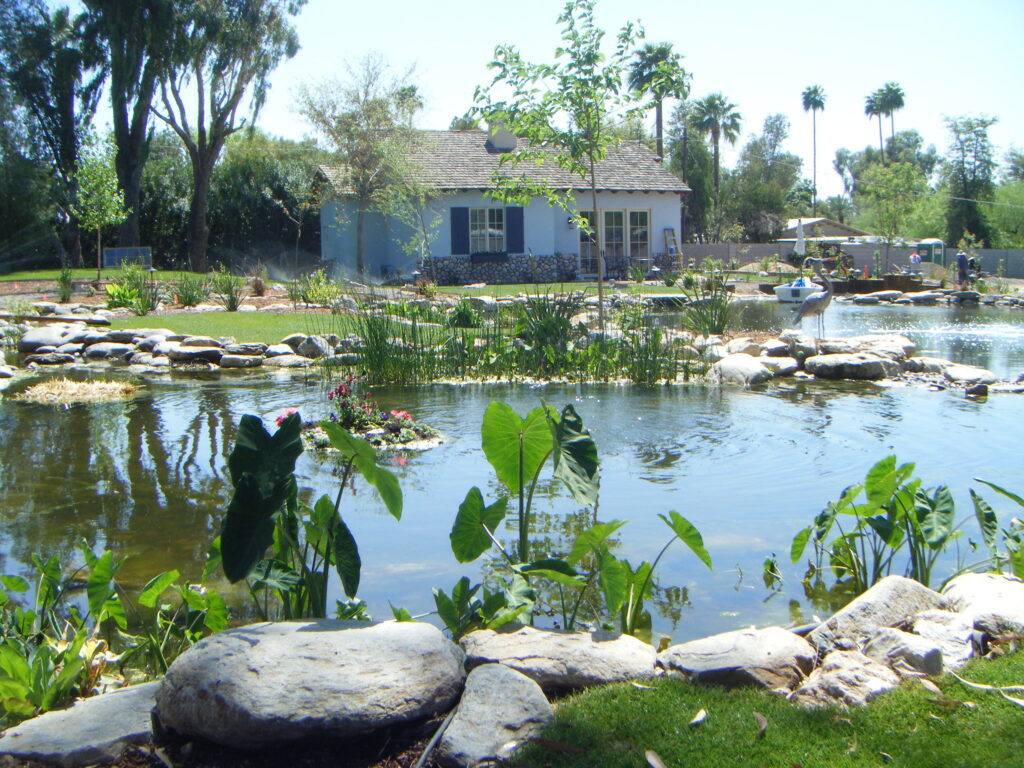
- Use aquatic plants like lilies and marginals to naturally shade the surface

2. Building the Pond in Full Sun
We get it—you want to see your pond. But full-day sun is a recipe for problems.
Mistakes:
- Placing the pond in the most visible but hottest spot
- No consideration for afternoon sun (the harshest in AZ)
Better approach:
- Aim for morning sun + afternoon shade
- Use nearby structures or landscaping for relief

3. Underestimating Evaporation
In Arizona, evaporation isn’t a minor inconvenience—it’s a constant battle.
What homeowners miss:
- Losing inches of water per week in the summer
- Not planning a refill system
Solutions:
- Install an auto-fill valve
- Reduce surface area exposure when possible
- Locate pond where it has protection from the prevailing wind
- Add shade to slow evaporation
4. Skipping Proper Filtration
A pond without proper filtration quickly turns into a swamp.
Common shortcuts:
- Using undersized filters
- Relying only on a pump without biological filtration
What works:
- Invest in a complete filtration system (mechanical + biological)
- Size your system for Arizona conditions (often larger than you think)
5. Going Too Small
Small ponds heat up faster, get dirty faster, and are harder to maintain.
Problems with small ponds:
- Temperature swings
- Poor water quality
- Limited ecosystem balance
The Pond Gnome rule:
Bigger is easier to maintain – especially in the desert heat!
6. Poor Liner Installation
Cut corners here, and you’ll pay for it later.
Typical mistakes:
- Using cheap or fragile liners
- Not protecting the liner from underlying rocks or root invasions
- Improper shaping, leading to folds and leaks
Best practices:
- Use high-quality EPDM liner
- Add underlayment for protection
- Take time shaping shelves and edges properly during the excavation process
7. Overcrowding with Fish Too Soon
Everyone loves koi—but too many too fast causes chaos.
What goes wrong:
- Overloaded filtration
- Poor water quality
- Fish stress and disease
Smart approach:
- Let the pond ecosystem mature and stabilize first
- Start with fewer fish
- Gradually add more finned friends over time

8. Forgetting About Maintenance
A pond isn’t “set it and forget it”—especially in Arizona.
Mistakes:
- No filter cleaning schedule.
- Ignoring seasonal adjustments
- Allowing debris to build up
Keep it simple:
- Schedule regular maintenance
- Check water levels weekly (especially in summer)
- Clean filters consistently
9. Not Planning for Monsoon Storms
Arizona storms can turn your backyard into a flash flood zone.
Common oversights:
- No controlled overflow system
- Poor drainage around the pond
- Debris washing into the water
Fix it before it happens:
- Create a controlled overflow solution
- Grade landscaping to divert runoff
- Use rock coping to stabilize edges
10. Trying to DIY Everything Without Experience
We love DIYers – just keep in mind that Arizona ponding has a learning curve.
What we see all the time:
- Costly rebuilds after failed installs
- Inappropriate equipment choices
- Frustration leading to abandoned ponds
The smarter move:
- Consult with pond professionals (like us)
- Do some research, and make sure that research is written/shown in the desert southwest; much of the advice from the Midwest or back East could be a recipe for disaster because our climate is so different
FAQ: Arizona Backyard Pond Questions
Q: How deep should a pond be in Arizona?
A: At least 2–3 feet deep. Deeper water stays cooler and helps protect fish.
Q: Do ponds lose a lot of water in Arizona?
A: Yes—especially in summer. Evaporation can be significant, so plan for regular refilling or install an auto-fill system.
Q: Can koi survive Arizona heat?
A: Absolutely—if the pond is properly designed with depth, shade, and filtration. Read our blog on the subject.
Q: How do I control algae in the desert?
A: Balance sunlight, add plants, and ensure proper filtration. Avoid overfeeding fish. Read our blog on the subject.
Q: Is it better to DIY or hire a professional?
A: DIY can work, but many homeowners end up spending more fixing mistakes. A professional build can save money long-term.
Conclusion: Build It Right the First Time
Building a backyard pond in Arizona is incredibly rewarding—but only if it’s done right. The biggest mistakes come down to underestimating the desert environment and skipping proper planning.
Remember:
- Plan for heat, sun, and evaporation
- Go bigger and deeper than you think
- Invest in proper filtration
- Think long-term maintenance
Do that, and your pond won’t just survive—it’ll thrive.
Ready to Build Your Dream Pond?
At The Pond Gnome, we specialize in designing and building ponds that actually work in Arizona’s harsh climate. Whether you’re starting from scratch or fixing a pond that’s gone sideways, we’ve got you covered.
Let’s make your backyard the oasis it’s meant to be.

Reach out today and let The Pond Gnome bring your pond to life—without the costly mistakes.